Don't Call Me — Call Him
a story about what a child earns, and what a mother cannot send
by Rayda Edding
Bismillah ir-Rahman ir-Raheem.
بِسْمِ اللَّهِ الرَّحْمَٰنِ الرَّحِيمِ
Based on a true story.
The Boy Who Wanted to Go
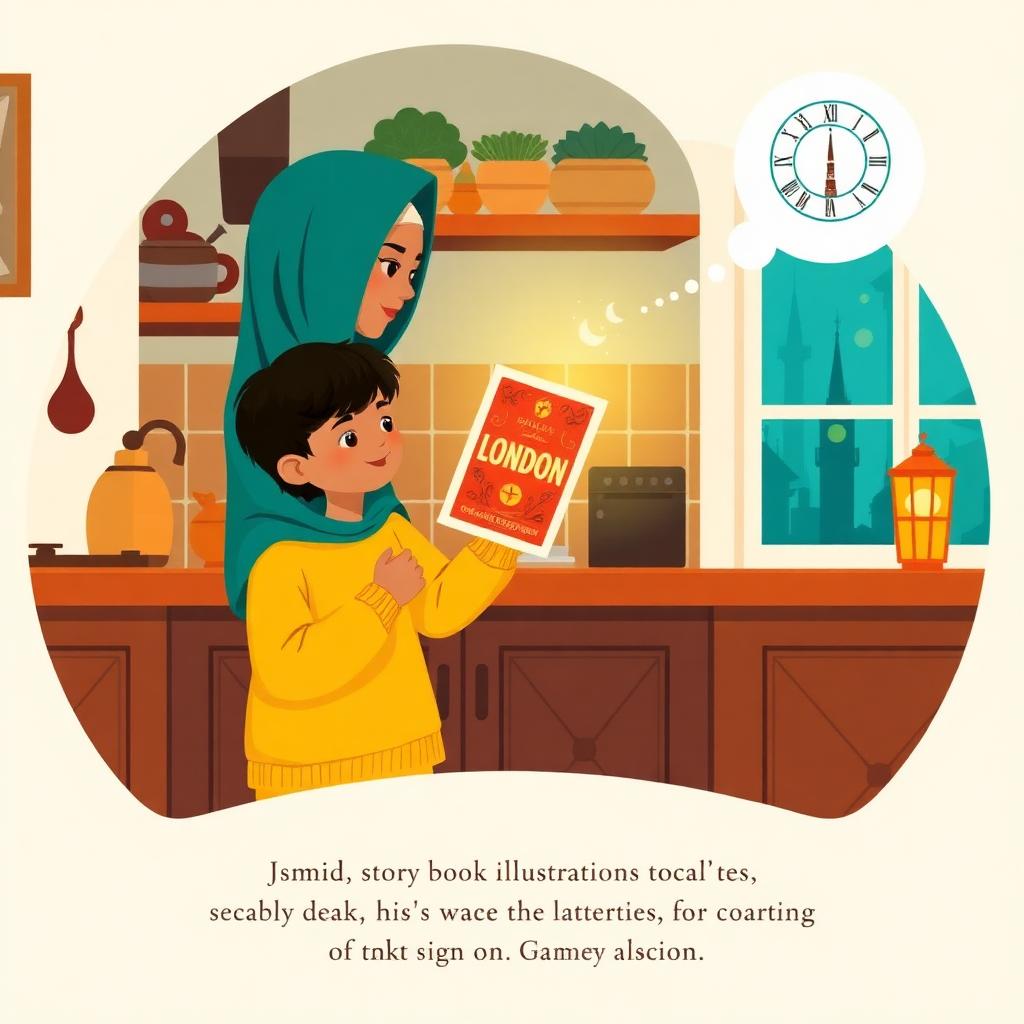
Idris was fifteen years old, and he wanted something so badly that he could not sit still.
There was a seminar in London. A whole weekend, studying the tafseer of Surah Yusuf — every word, every meaning, the whole enormous story of the prophet who was thrown in a well by his own brothers and came out the ruler of Egypt.
Idris wanted to be in that room more than he had ever wanted anything.
But London was an ocean away.
He found his mother in the kitchen. He had a whole speech prepared. He got about four words into it.
"Please can I —"
"Mm," said his mother, not looking up. "What's it worth?"
Not a Prize You Buy
Now, you have to understand how things worked in that house.
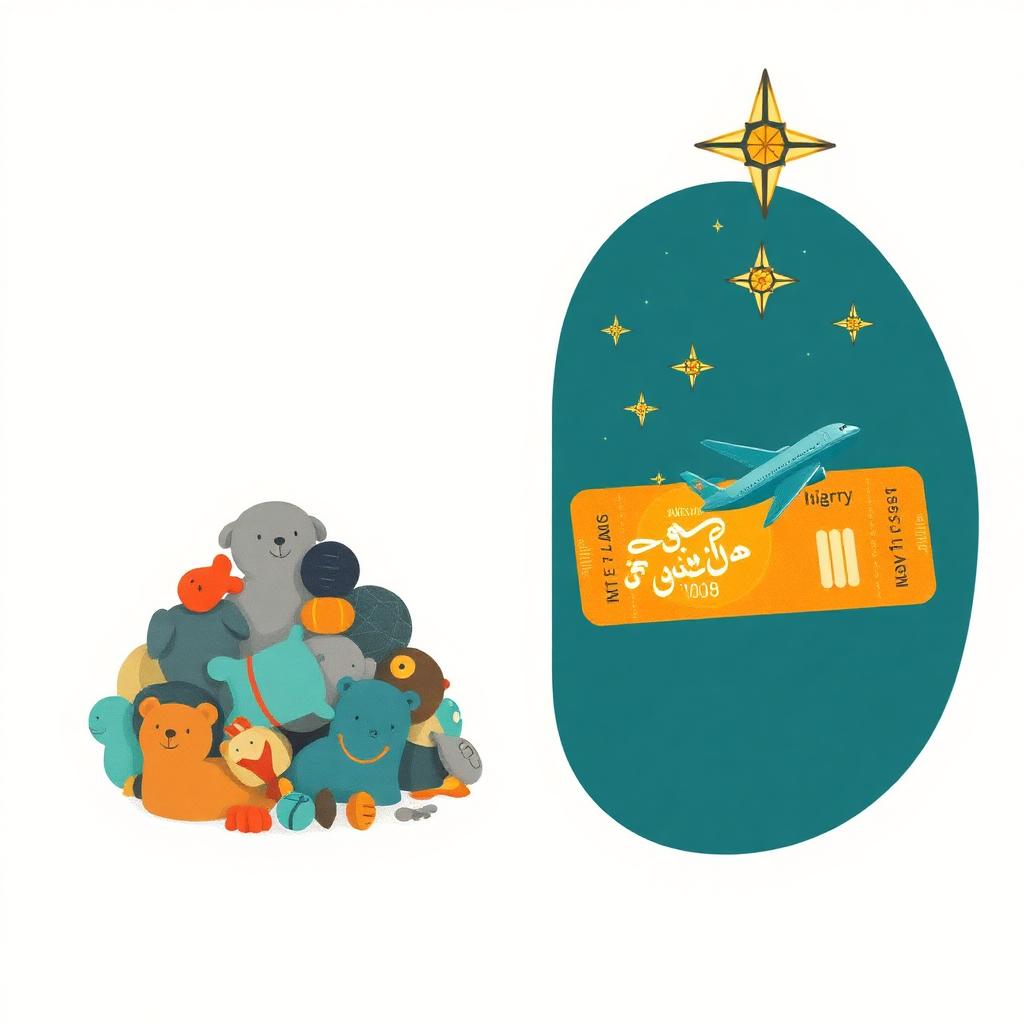
Idris had five sisters, and not one of them had ever been given a mountain of presents. Not once. Not at Eid, not at graduations, not ever.
Because years ago his parents had made a quiet decision that shaped the whole family:
They would not raise their children on things.
Not on the newest toy. Not on the bigger room. Not on the gift that shines in the box and is forgotten by the next moon.
"We saw where that road ends," Mama always said. "In children who can name every brand and cannot remember one single afternoon."
So instead of things, they were given the world. A graduation was not wrapping paper. It was a boarding pass. Every milestone was a departure gate.
And they took an ayah and they lived inside it:
أَفَلَمْ يَسِيرُوا فِي الْأَرْضِ فَتَكُونَ لَهُمْ قُلُوبٌ يَعْقِلُونَ بِهَا
“Have they not travelled through the land so that they may have hearts by which to understand, and ears by which to hear? Indeed, it is not the eyes that are blind, but the hearts within the chests that are blind.”
— Surah Al-Hajj (22:46)
But — and this is the part that mattered — a ticket was never, ever just handed over.
In that house, you did not earn a journey by being old enough. You did not earn it by asking.
You earned it by your salah. By your friendship with the Quran. By the fasts you kept when nobody was counting. By the Tahajjud you prayed alone in the dark, when the whole house was asleep and only Allah was watching.
Reach that — and you had a blank cheque. You could go almost anywhere on earth.
Because, as Mama put it: a child who looks for Allah in the dark of her own room will not lose Him in the bright lights of a foreign one.
The Challenge
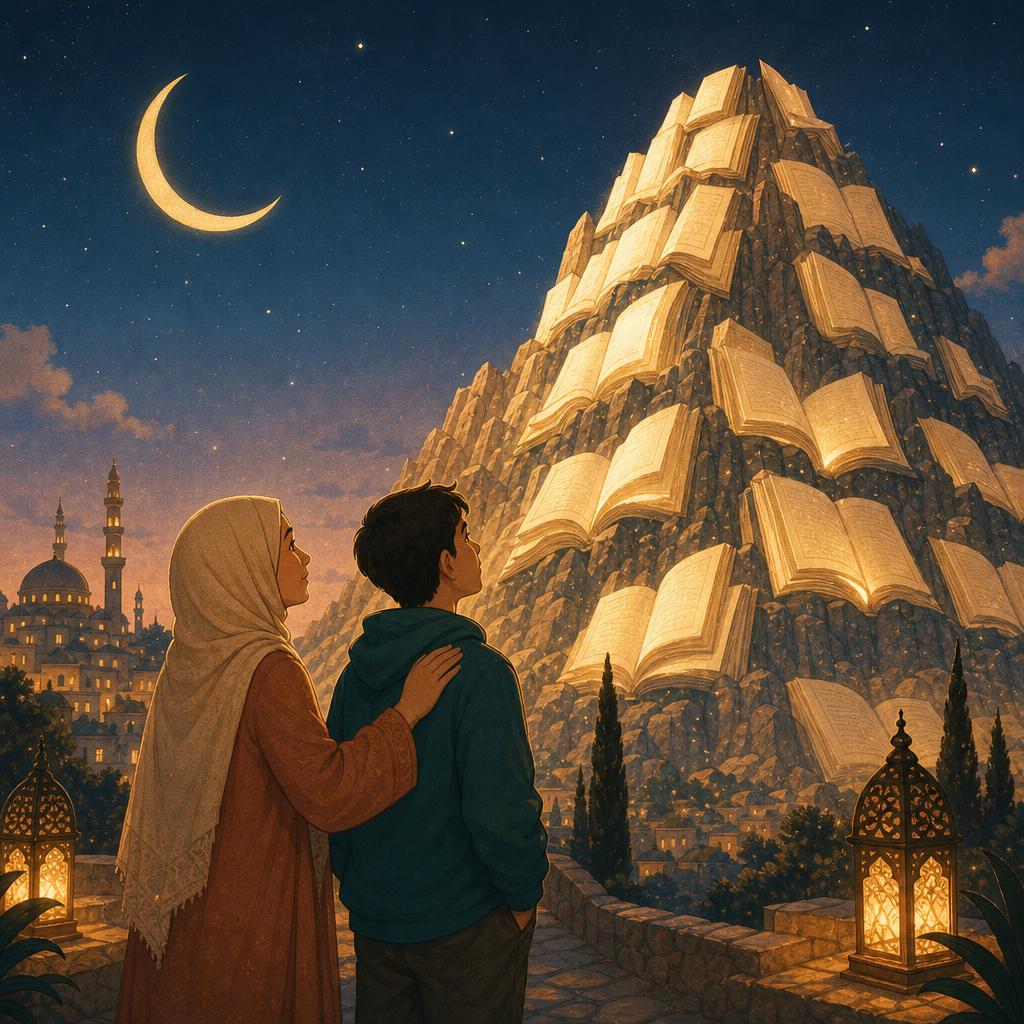
So Idris stood in the kitchen and waited, and his mother finally looked up at him.
And she gave him the challenge.
"Surah Yusuf," she said. "Memorise it."
Idris's stomach did something complicated.
Surah Yusuf is one hundred and eleven ayat. It is one of the longest stories in the entire Quran.
"…All of it?"
"All of it."
"By when?"
"Two weeks."
There was a silence in that kitchen you could have leaned against.
"And if I do?"
His mother shrugged, as though it were the smallest thing in the world.
"Then the seminar is yours."
Here is the thing Idris did not know — the thing his mother never told him until years and years later:
She did not know if he could do it.
She was not sure at all. She had picked a mountain, and she had handed it to a fifteen-year-old, and then she had gone very quietly to her room and made du'a — not that he would succeed,
but that he would find out what he was made of.
Two Weeks
What happened next, Idris's sisters still talk about.
He disappeared.
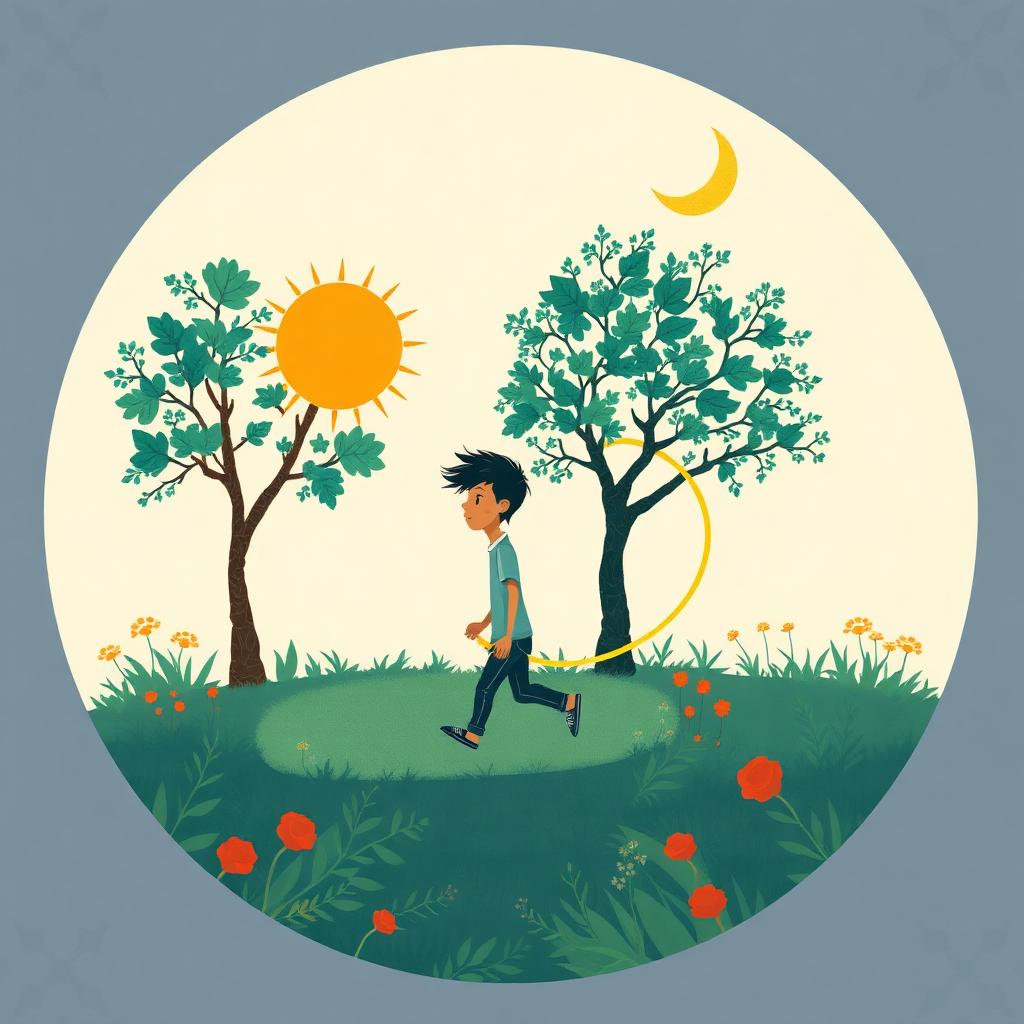
Ayah by ayah. Line by line. Morning, afternoon, and long after the house had gone dark. Walking around the garden with his lips moving. Repeating one line ninety times until it stopped being words and became his.
Yusuf in the well. Yusuf in the palace. Yusuf in the prison, interpreting dreams for men who forgot him. Yusuf standing in front of the brothers who threw him away — and choosing not to destroy them.
"No blame upon you today."
Somewhere in the middle of the second week, something happened that Idris did not expect.
He stopped memorising for the ticket.
He got lost in the story.
That is Allah's beautiful way. A person goes to the Quran for one reason — and it quietly changes the reason on them while they are not looking.
The Last Ayah
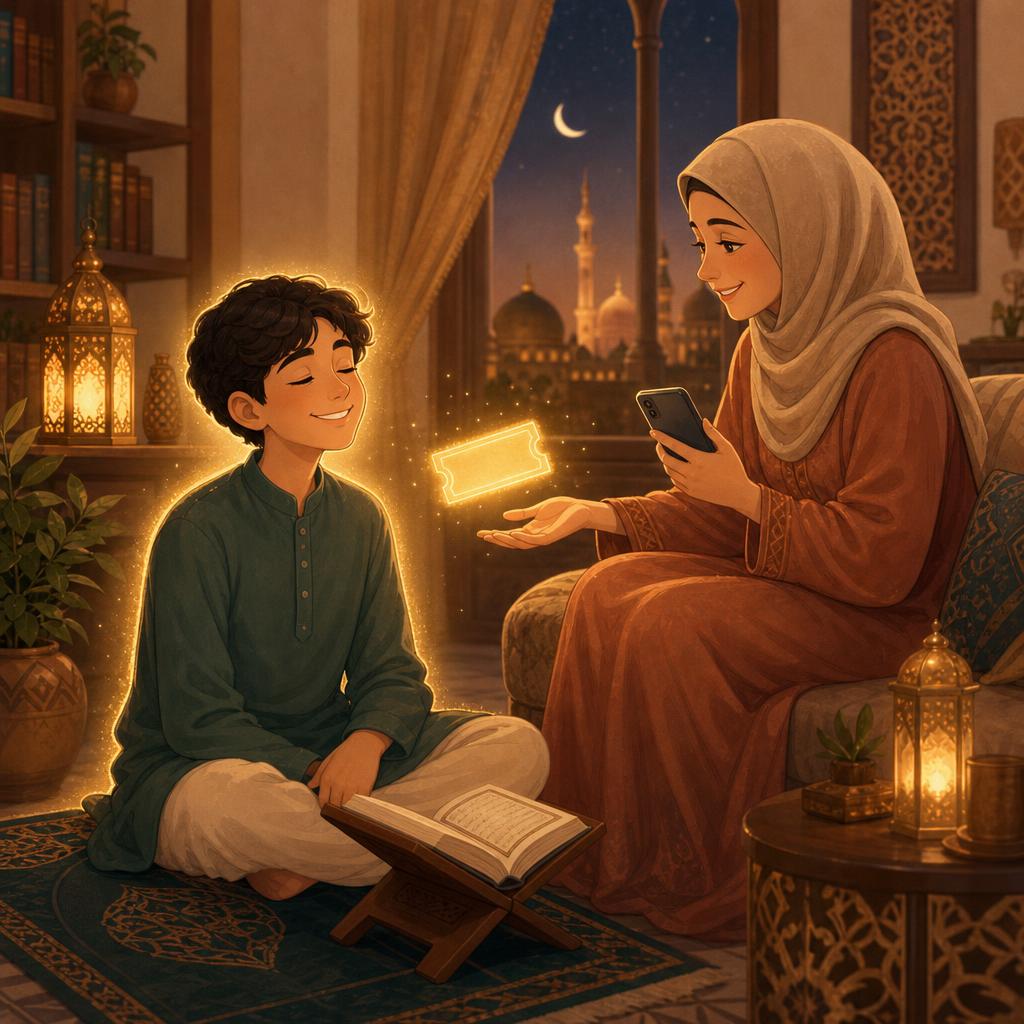
On the fourteenth day, Idris came and stood in front of his mother.
And he recited.
All the way through. One hundred and eleven ayat. From the dream of the eleven stars to the very last word.
His mother sat perfectly still and listened to her son give her the whole of Surah Yusuf from memory.
And the second he finished the last ayah — before the sound of it had even left the room —
she picked up the phone.
She booked the ticket.
Then she called their friends in London and arranged where he would stay.
Idris stared at her. "You — just now? Right now?"
"Right now," said his mother. "Because in this house, habibi, the reward for reaching toward Allah is never a thing you put on a shelf.
It is a door you walk through."
Learning to Fly
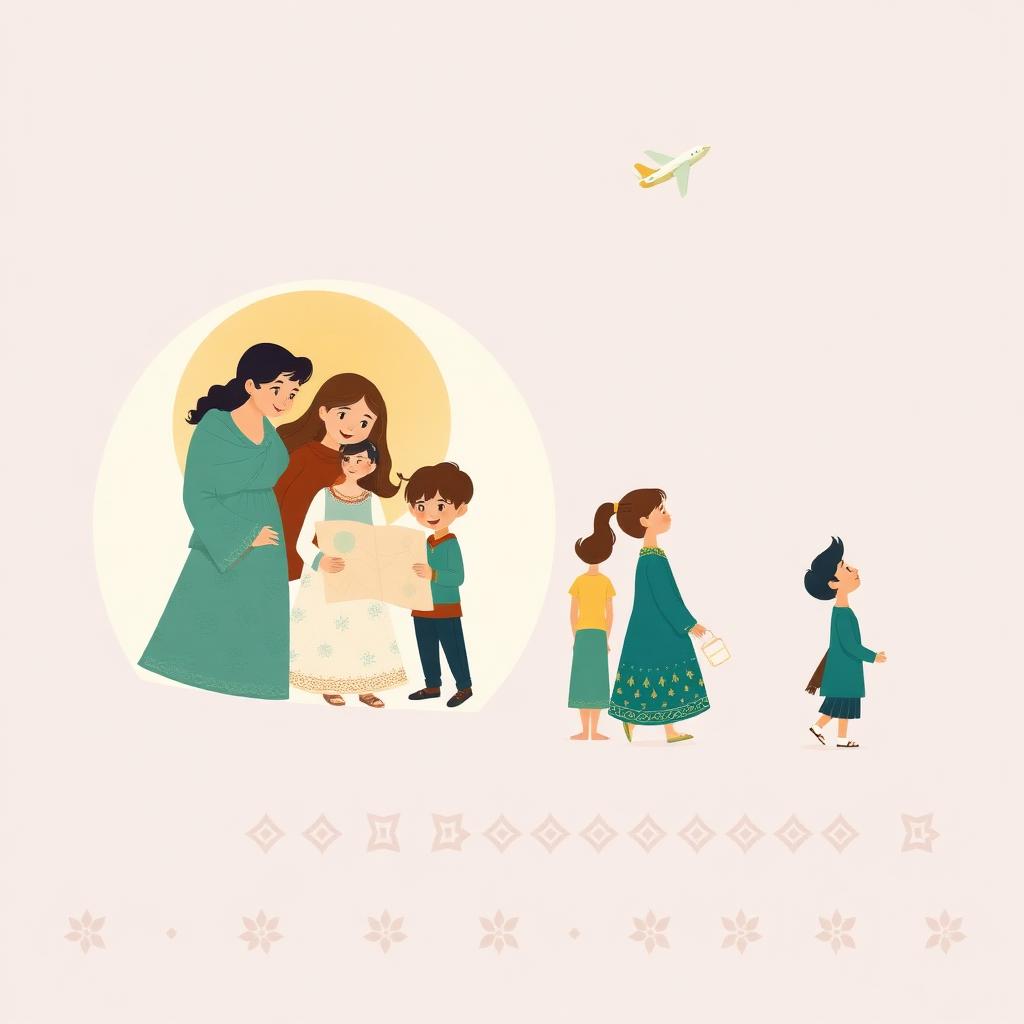
Nobody in that family was ever thrown into the sky.
They were taught, the way you teach anything that matters — slowly, with your hand under theirs until the day it is not needed.
First, they travelled as a family. They watched. They saw how a journey is made — the planning, the patience, the du'a before the plane. They saw their parents lose a connecting flight and not lose their faith along with it.
Then, they were handed the map. Plan it yourselves. Stumble. Recover. Feel the weight of a decision that is finally your own.
Then came the buddy system — two of them, alone together, each one half responsible for the whole. No parent to fall back on. Just a brother, a sister, the deen between them, and Allah above them.
And then — alone.
Idris was fifteen the first time he flew by himself.
And after London, they went everywhere. His eldest sister crossed China on her own, sitting in trade shows, lighting the spark of the business she built. Another flew to South Korea. Another went through Malaysia and the Philippines and Thailand. The youngest two closed the circle — ten countries in two months.
Every one of them earned the title that was never given away for free:
A traveller. On her own. Trusted to the world, and trusted to Allah.
What She Says at the Gate
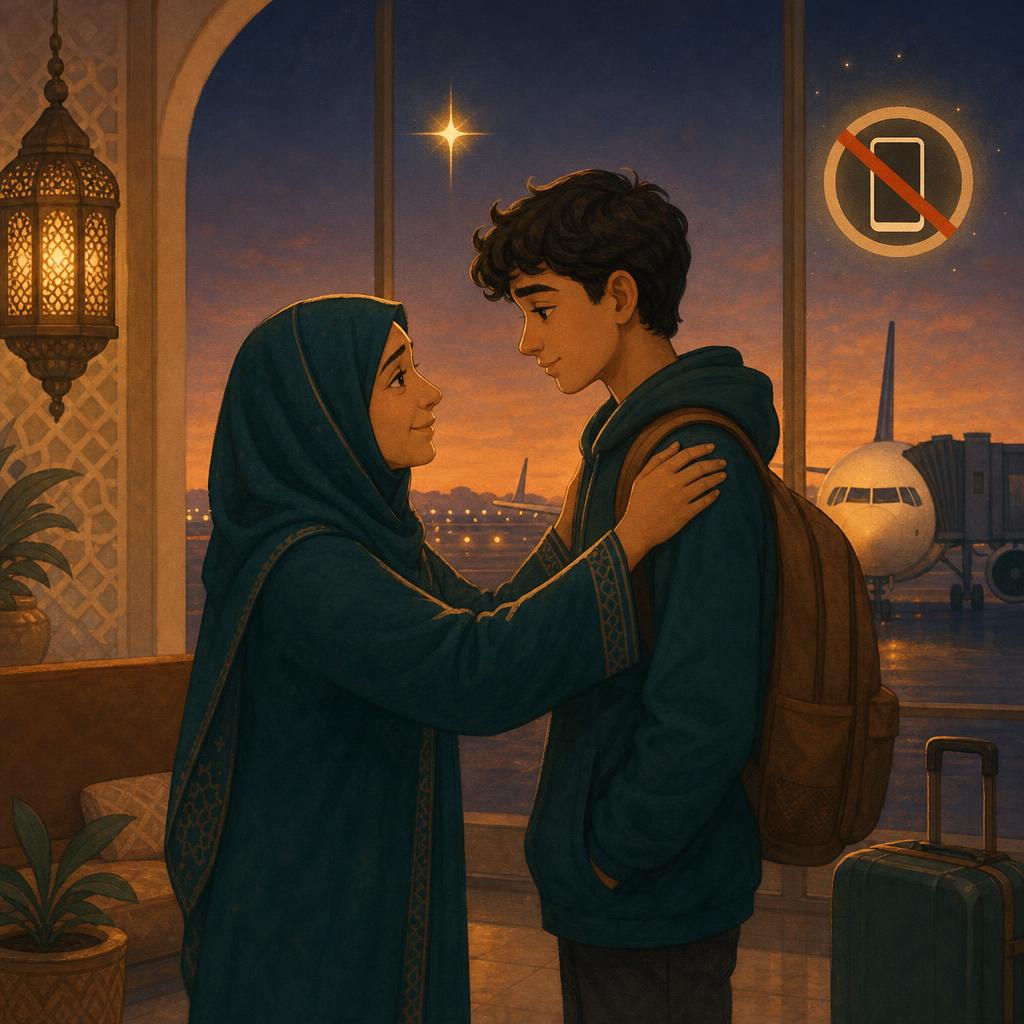
And every single time — every time — his mother said the same words at the airport gate.
She says them still.
She would take her child by the shoulders, and look them right in the eye, and say:
"If you get into trouble — do not call me.
Call upon Allah.
You have built a real relationship with Him now. He will not forsake you.
I cannot reach you from here, habibi. I cannot save you."
And then — every time — she would smile, and add the only exception:
"But if you need money — call me. That, I can wire. That, I can fix."
And they would laugh.
And then they would walk through the gate.
And their mother would stand there with her heart absolutely full, knowing the truest part of what she had just said:
There is a help I cannot send across an ocean.
There is only One who can.
And I spent every year of your childhood making sure you knew His number by heart.
إِن يَنصُرْكُمُ اللَّهُ فَلَا غَالِبَ لَكُمْ
“If Allah helps you, none can overcome you; but if He forsakes you, who is there that can help you after Him? So in Allah let the believers put their trust.”
— Surah Aal 'Imran (3:160)
That verse was the real gift.
Not the ticket.
The trust.
The Hand on the Cheek
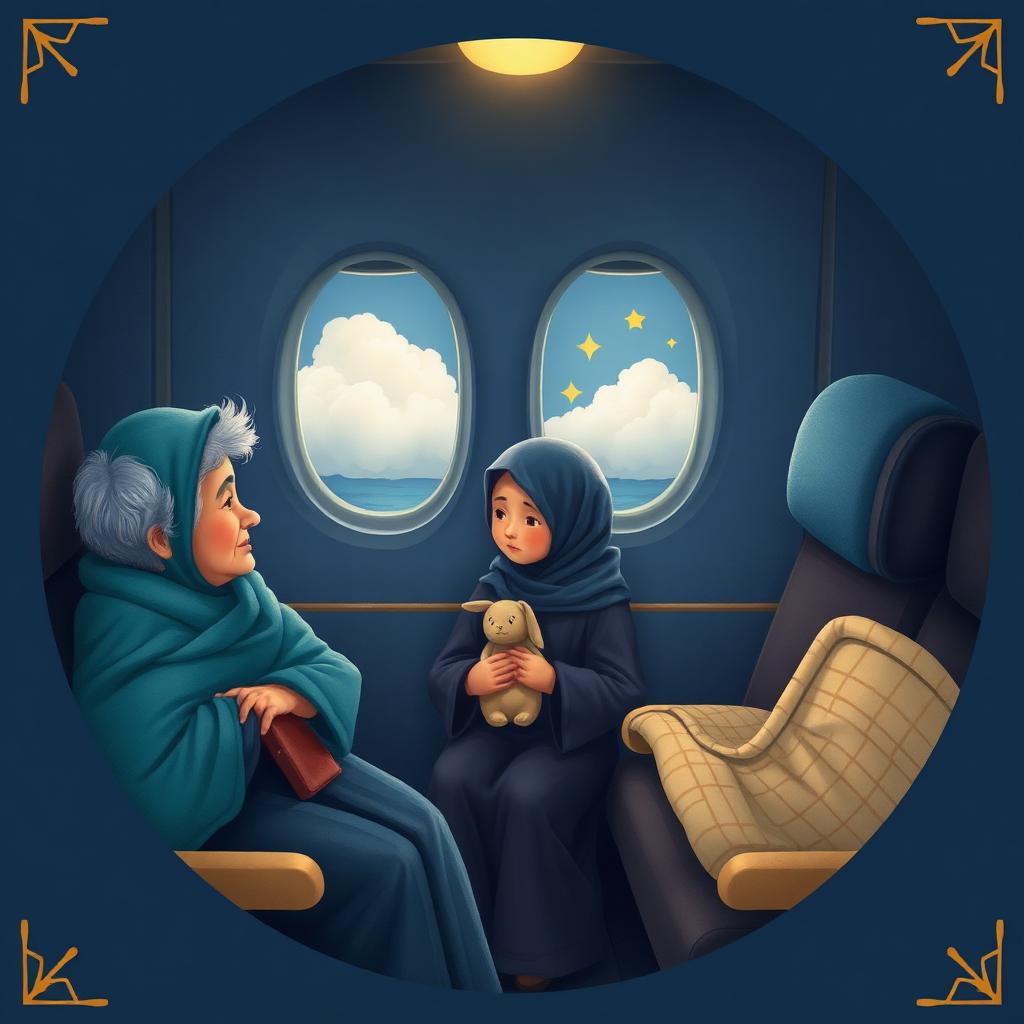
Now I want to take you to a plane, many years later.
Chicago behind them. Seattle behind them. Seoul, Manila, Tokyo — all behind them. Twenty days. Five cities. Three generations folded into one row of seats.
An old woman. Her youngest daughter. And a fifteen-month-old granddaughter with sticky fingers, wide awake when she should have been asleep.
And on the very last flight home, the baby reached up and patted her mother's cheek.
And her mother leaned down and whispered something into that little ear, and the baby laughed.
And the grandmother sat beside them and felt the hair rise on her arms.
Because she had sat in that exact seat before.
Twenty-three years and a hundred flights ago — whispering into the ear of that mother, when she was the baby.
She watched her daughter take her own daughter's small hand and turn it gently toward the window. Toward the clouds. Toward the enormous spinning world she has only just started to meet.
She did not learn that from a book.
She learned it from a hand that once turned her face toward that same window.
And the grandmother leaned back in her seat — small and ordinary and undeserving, and exhausted, and completely overflowing — and she did something a mother almost never allows herself to do.
She reached back quietly, and she patted her own shoulder.
You did a good job.
“If you put your trust completely in Allah, He would provide for you as He provides for the birds. They go out in the morning hungry and return in the evening full.”
— Sunan At-Tirmidhi
Her children went out into the world hungry — for knowledge, for growth, for Him.
And every single one of them came home full.
اللَّهُمَّ اجْعَلْ أَوْلَادَنَا مِنَ الصَّالِحِينَ
Allahumma ij'al awladana min as-saliheen. Allahumma ihfadh-hum min kulli sharr. Allahumma-rzuqhum hubb al-Quran wa hubb an-Nabi ﷺ.
O Allah, make our children among the righteous. O Allah, protect them from every harm. O Allah, grant them love for the Quran and love for the Prophet ﷺ. O Allah — when they are far from us and afraid, let their first instinct be You. Ameen.
For children who want to go far
- 1
Ask for a mountain. Ask your parents for a real challenge with a real reward at the end — and then go and find out what you are made of. You will surprise yourself. They are hoping you will.
- 2
Choose the afternoon, not the toy. The toy breaks before the season ends. The day you spent together will outlive you both.
- 3
Build the inside first. Your salah. Your Quran. The Tahajjud nobody sees. That is the only luggage that actually matters — and it is the only thing that travels with you everywhere.
- 4
Learn Whose number to call. When you are far away and frightened, let your first instinct be Allah — not your phone. That is the one help that reaches every gate, in every city, in every dark hour.
- 5
Pass it on. One day you will hold someone small. Turn their face toward the window. Show them the enormous world their Lord made — the way somebody once did for you.