The Belt Nobody Sees
a story about the words that don't need saying
by Rayda Edding
Bismillah ir-Rahman ir-Raheem.
بِسْمِ اللَّهِ الرَّحْمَٰنِ الرَّحِيمِ
Inspired by a real little brother, and a real great-grandfather's porch in Florida.
Yusuf, Son of Yusuf
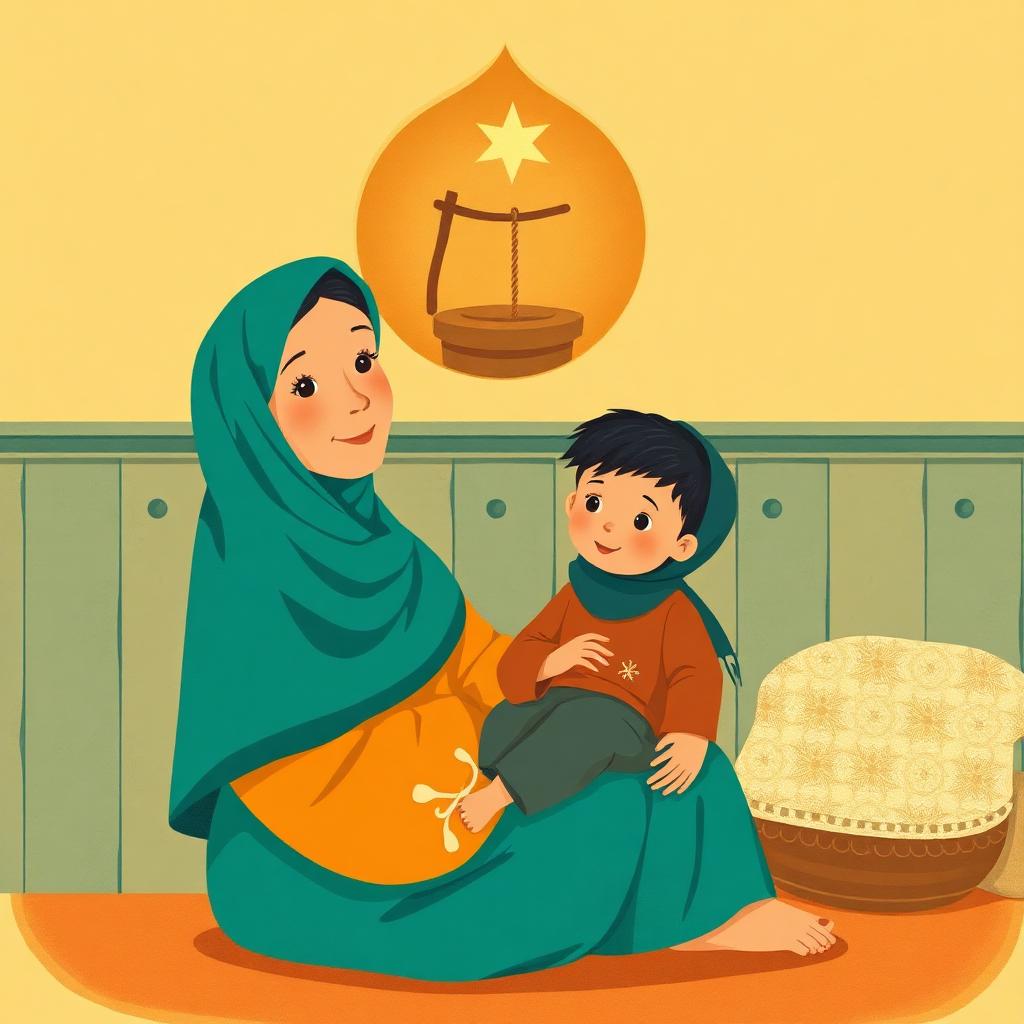
Yusuf was four years old, and — his mother would tell anyone this before they even asked — he was a very handsome little boy.
She had named him after the Prophet Yusuf (alayhi salam), whose face, the Quran says, was so beautiful that women once cut their own hands and did not notice, because they were too busy staring.
But here is the part Yusuf's mother told him, over and over, from the time he was small enough to still be carried:
"That is not why I named you after him, habibi."
"Then why?"
"Because Prophet Yusuf was not tested by his handsome face. Anybody can have a face. Allah tested him with something much harder — He put him alone in a room, with no one watching, where he could have done something wrong and no one on earth would ever have known.
And he chose to be good anyway.
Then his own brothers threw him in a well and lied about him and sold him like an object — and years later, when he had all the power in Egypt and could have crushed every single one of them, he looked at them and said:
'No blame upon you today.'
That is the beauty I named you for, Yusuf. Not the one on your face.
The one Allah cannot see with His eyes, because He does not have eyes — but He sees it more clearly than anything else in you."
Yusuf was four. He did not understand all of that yet.
But he never forgot it either.
The Colours on the Wall
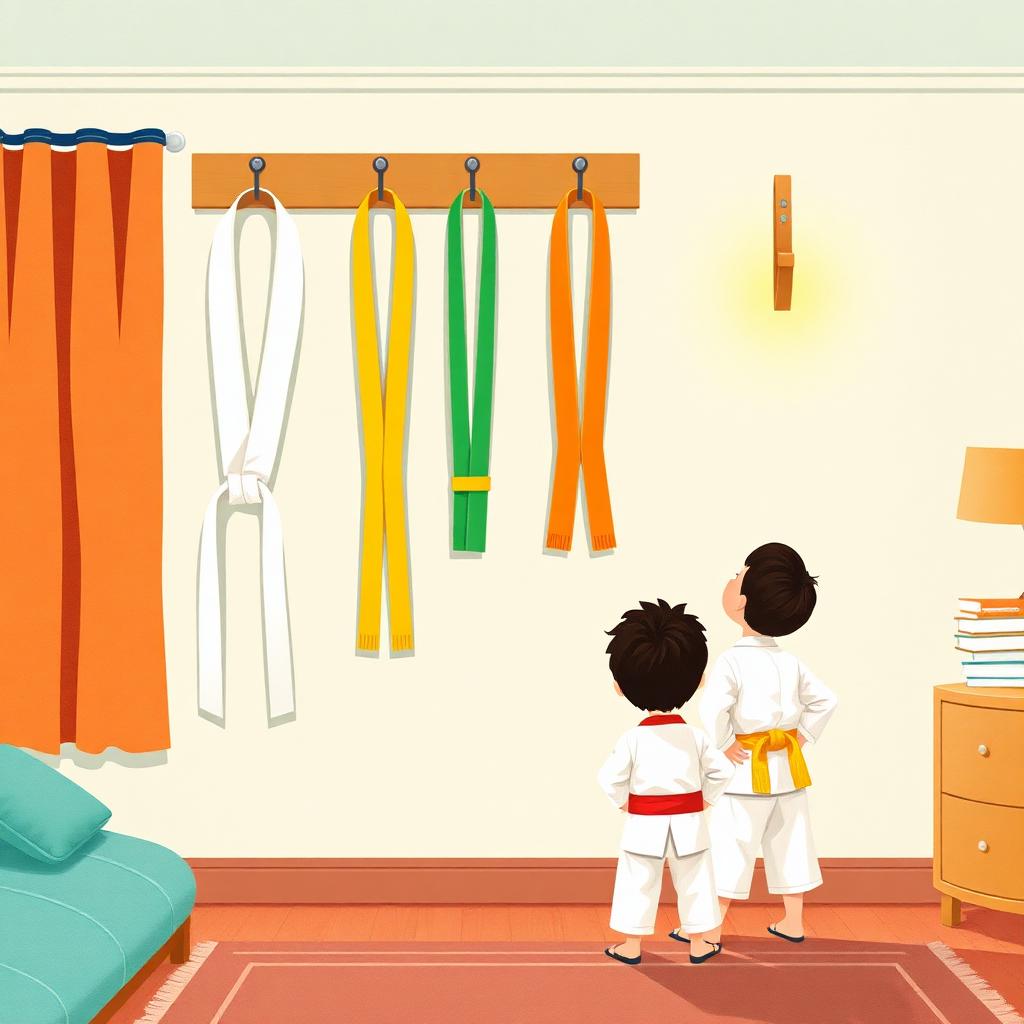
Now, Yusuf had a wall in his room, and on that wall, in a little row, hung four belts.
White. Yellow. Orange. Green.
Jujitsu — and the one true thing about it was what Yusuf's instructor said on the very first day, to a room full of small, excited, impatient children:
"Nobody gets a black belt for talking about it."
Yusuf wanted to skip straight to black. Of course he did — he was four, and four-year-olds want the shiny thing now.
But it does not work that way. You earn white. Then you practise the same kick nine hundred times until your leg knows it without your brain having to ask. Then, only then, you are allowed to try for yellow.
It was slow. It was boring some days. There was one particular Tuesday when Yusuf sat on the mat and announced, with enormous four-year-old dignity, that jujitsu was "actually quite stupid."
His instructor — who had heard this exact sentence roughly four thousand times in his career — crouched down and said:
"Yusuf. Do you know what a black belt really is?"
"…A belt?"
"It is a white belt that did not quit."
Yusuf thought about that the whole car ride home.
Musa
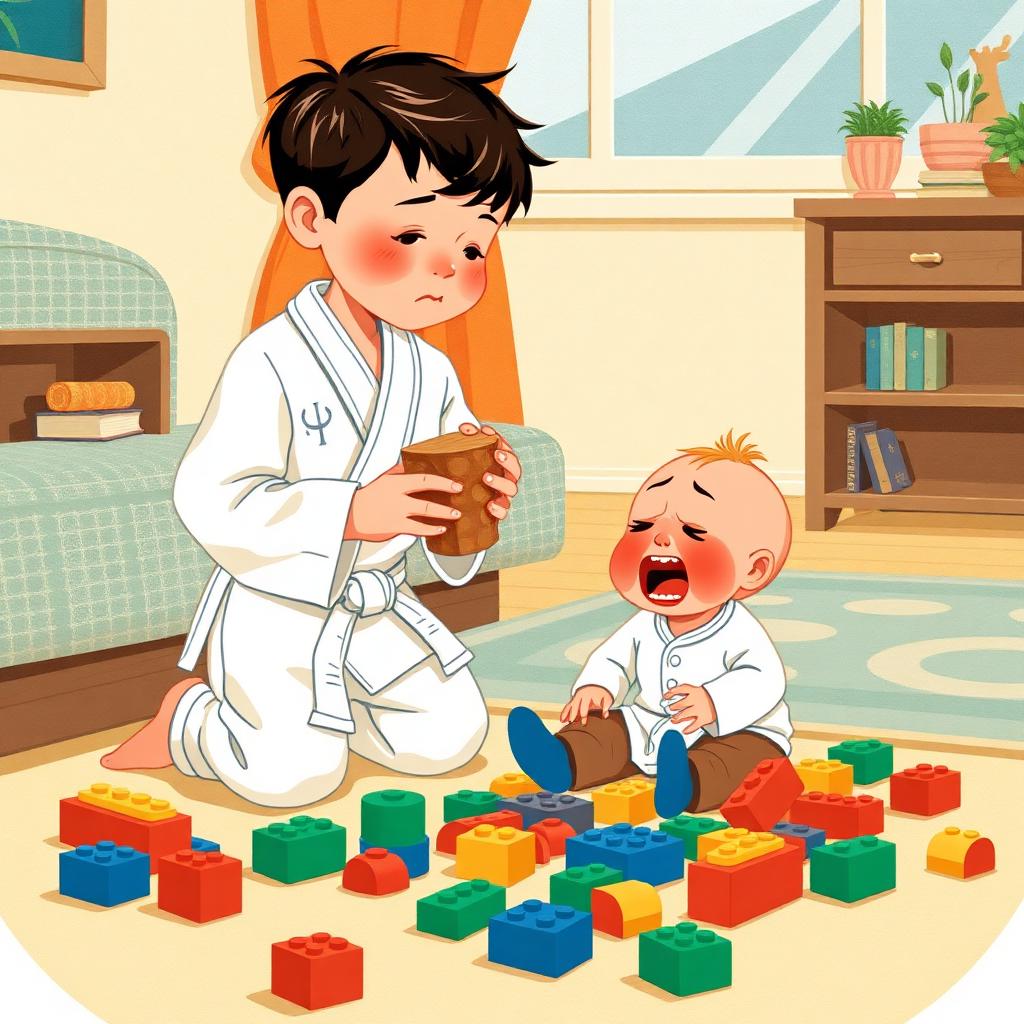
At home, there was somebody smaller than Yusuf, and that somebody's name was Musa.
Musa could not walk yet. Musa could not talk yet. Musa's main skills, as far as Yusuf could tell, were crying, drooling, and grabbing anything shiny within arm's reach — which, unfortunately, included several of Yusuf's Lego creations.
And Yusuf was furious about this on a semi-regular basis.
But here is what his mother taught him, on an ordinary evening while Musa screamed about nothing in particular:
"Yusuf. You want to help people far away one day, don't you? Show them how beautiful Islam is?"
"Yes!"
"Then you have to start with the person closest to you. Right here. In this room."
She pointed at Musa, red-faced, furious, entirely unreasonable.
"If you cannot be patient with your own brother — who cannot even say your name yet — how will you ever be patient with a stranger?"
There is an ayah about exactly this, and Yusuf's mother said it to him so many times he could say it back to her before he could properly read:
وَأَنذِرْ عَشِيرَتَكَ الْأَقْرَبِينَ
“And warn your closest relatives.”
— Surah Ash-Shu'ara (26:214)
"Allah told the Prophet ﷺ to start with the people nearest to him first, Yusuf. Not because they matter more. Because if your character cannot survive your own little brother… it will not survive anybody else either."
So Yusuf — with enormous, dramatic, four-year-old effort — learned to hand Musa a different toy instead of shouting. He learned to say "gentle, Musa, gentle" instead of snatching things back. He learned to be the big brother who checked, every single time, whether the baby was okay before he checked whether he himself was annoyed.
It was, without a single doubt, harder than any kick he had ever learned on the mat.
The Flight to Florida

Twice a year, the whole family flew to Florida, to a little house with a fan on the porch and a very old man sitting under it, a tall glass of sweet tea sweating in his hand and a plate of something good never far away.
That was Pop-Pop. Everybody called him Pop-Pop.
And beside him, most days, was Grandpa — Yusuf's father's own father. The grandchildren called him Granddaddy.
Pop-Pop's kitchen smelled, always, like somebody was cooking for an army. Collard greens simmering low and slow with smoked turkey instead of ham hock, because Granddaddy had asked him years ago and Pop-Pop, without making a fuss about it, had just started doing it that way. Cornbread in a cast-iron skillet. Red beans and rice. Baked mac and cheese with the crispy top. Fried whiting. Candied yams. Peach cobbler cooling on the counter under a clean dish towel. "Y'all hungry?" Pop-Pop would ask, every single time somebody walked in, whether they had just eaten or not. "Come on in here, baby, fix you a plate."
Now here is something Yusuf noticed early, the way children notice everything and say it out loud before anybody has taught them to whisper it:
Pop-Pop did not pray.
He did not fast. He had never opened a Quran. When Yusuf's family said Bismillah before dinner, Pop-Pop would watch them with a small, curious smile — the way you watch something interesting that you do not quite understand. Then he'd nod and say, "Go 'head now, bless that food," and pass the cornbread. Granddaddy prayed with them; he had taken his shahada years ago, and it was Granddaddy's own father — Pop-Pop — who still had not.
"Mama," Yusuf whispered once, tugging her sleeve. "Why doesn't Pop-Pop pray?"
"Because he doesn't know Islam yet, habibi."
"Then why don't we just tell him?"
And that was where this whole story really began.
"Why Don’t We Just Tell Him?"
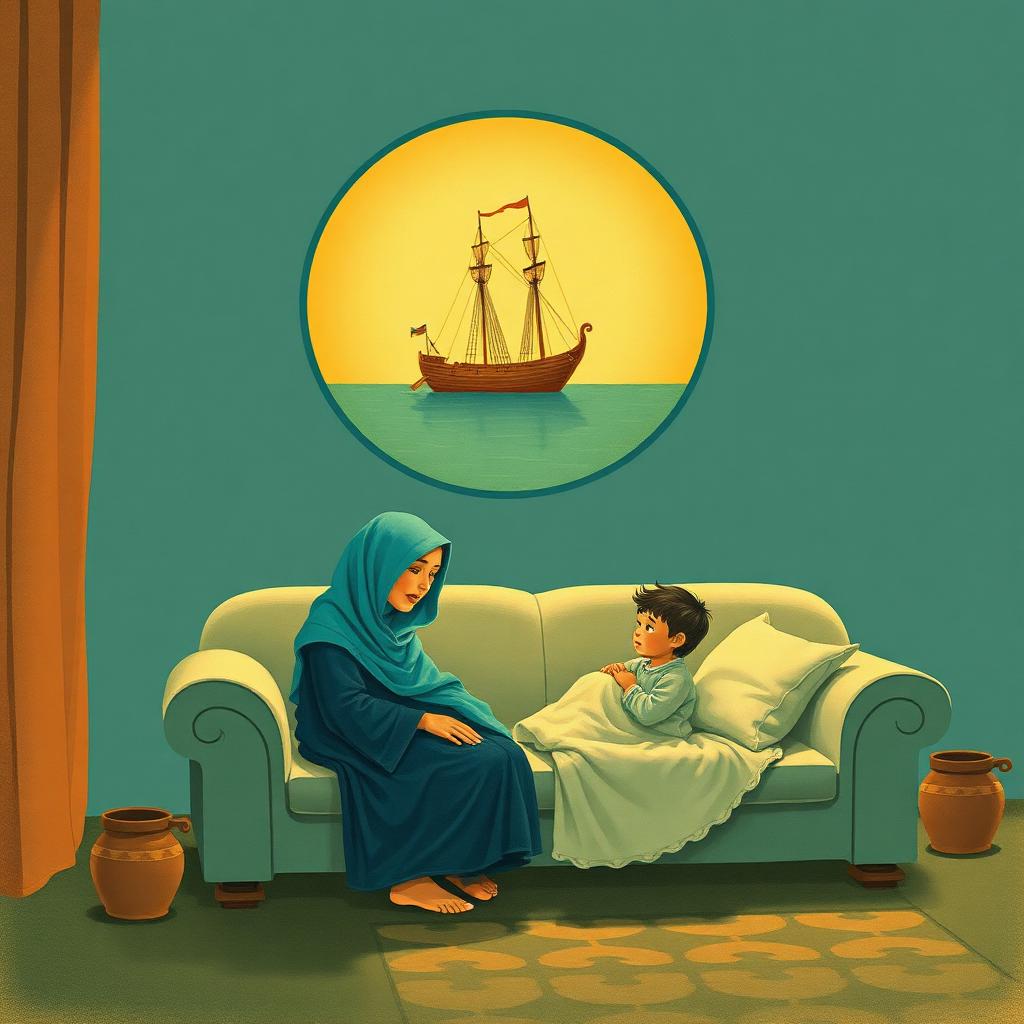
That night, on the fold-out sofa, Yusuf asked his mother the question again, and this time he would not let it go.
"Mama. He's so old. What if he… what if he never finds out about Jannah? Shouldn't we just tell him? Right now? Everything?"
His mother sat down on the edge of the sofa bed and took a long breath, the way grown-ups do when a child has just asked them the biggest question in the world in their pyjamas.
"Yusuf, do you remember your very first day of jujitsu? When you wanted to skip straight to black belt?"
"…Yeah."
"Da'wah is like that too, habibi. Allah gave us the way to do it, and it is not shouting the whole thing at once. Listen:"
ادْعُ إِلَىٰ سَبِيلِ رَبِّكَ بِالْحِكْمَةِ وَالْمَوْعِظَةِ الْحَسَنَةِ
“Invite to the way of your Lord with wisdom and beautiful preaching.”
— Surah An-Nahl (16:125)
"With wisdom, Yusuf. Not with force. Not all at once, on a fold-out sofa, to a man who has lived eighty-something years his own way.
Do you know how Islam reached entire countries, on the other side of the world, hundreds of years ago? It was not armies that did it, mostly. It was traders. Ordinary men who sailed to far places to sell cloth and spices — and who were so honest, so fair, so kind to the people they did business with, that those people started asking:
'What is it about you that makes you like this?'
Nobody preached at them in the marketplace, Yusuf. Their character did the preaching. Their words came only after — when somebody finally asked."
Yusuf lay very still, thinking about the white belt that did not quit.
"So… I have to earn it. Like a belt."
His mother's eyes went soft in the dark.
"Exactly like a belt, habibi. And this one, nobody hands you a certificate for.
This one, only Allah sees."
What Pop-Pop Noticed
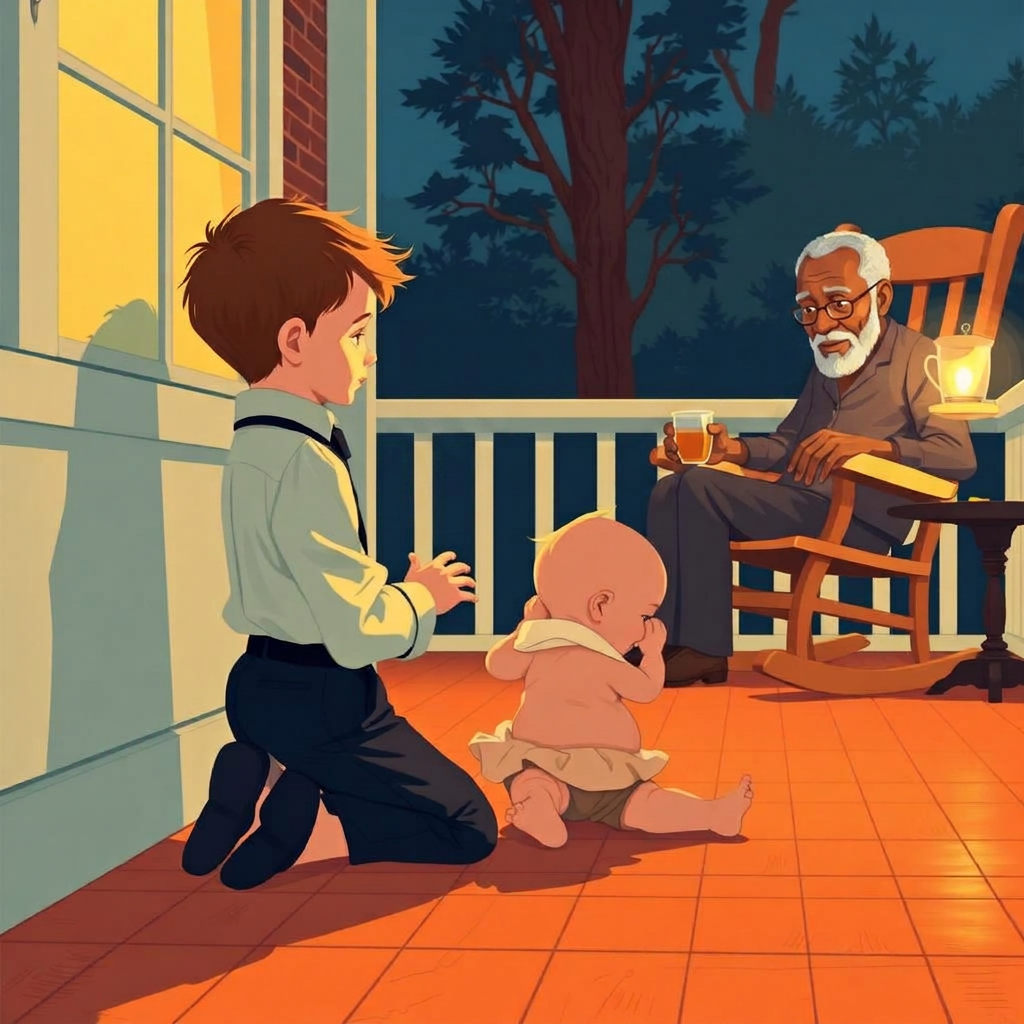
Three days later, something happened that Yusuf's mother would remember for the rest of her life.
Musa had a meltdown — a proper one, a red-faced, floor-drumming, ear-splitting one — right there on Pop-Pop's porch, in front of everybody, right next to a plate of peach cobbler somebody had set down and forgotten about.
And Yusuf did not roll his eyes. He did not shout at Musa to stop embarrassing him. He got down on the porch floor, in his good trousers, and said, very calmly, in his very best big-brother voice:
"Musa. Gentle. I'm here."
And he stayed there. Patting his brother's back. Not performing for anybody. Not even glancing up to see if he was being watched.
He was being watched.
Pop-Pop put down his glass of sweet tea and looked at that small boy on the floor for a long moment. Then he shook his head slow, the way old folks do when something has struck them, and said, mostly to himself:
"Mm, mm, mm. Would you look at that."
Later that evening, when Musa was finally asleep and the porch had gone quiet, Pop-Pop turned to Yusuf's mother, put a hand on her arm, and said, in his slow, careful, eighty-something voice:
"Baby, that boy of yours… he's something else, you hear me? The patience on that child. Where does a little bitty four-year-old learn to sit still like that with his brother? Y'all raising him right. Y'all raising him right."
And Yusuf's mother — who could have said a hundred things in that moment — smiled, and said only this:
"We try to teach him it comes from somewhere bigger than us."
Pop-Pop nodded slowly. "Mm. That'll do it. That'll do it every time."
He did not ask anything else that night.
But he had asked. And in this whole story, that was the door opening.
The Quietest Language in the World

There is a reason it works this way, and Yusuf's mother explained it to him properly the next morning, sitting on the porch steps while the fan turned slowly above them.
"Do you know what Aisha (radiyallahu anha), the Prophet's own wife, said when someone asked her what he ﷺ was like?"
"What?"
“His character was the Quran.”
— Sahih Muslim
"She did not describe how he looked, Yusuf. She did not talk about his voice, or how tall he was. She said: if you want to know what the Quran means, watch how he treats people.
That is the quietest, loudest language in the whole world, habibi. It does not need a single word. Pop-Pop cannot read Arabic. He has never opened a Quran in his whole life.
But he can watch how you treat your brother.
And that — every bit of it — he understands perfectly."
Yusuf thought about the porch. About getting down on the floor in his good trousers. About not even checking if anyone saw.
"So… Pop-Pop read something yesterday. Even though there wasn't a book."
His mother's whole face lit up.
"Yes, habibi. He read you."
The Belt Nobody Sees

They flew home a few days later, the way they always did — Musa asleep on Baba's shoulder, Yusuf pressed to the window watching Florida shrink into a green-and-blue smudge below.
And Yusuf thought about belts the whole flight.
The white one on his wall, that he had earned by kicking the same kick nine hundred times until his leg stopped needing his brain's permission.
And the other one. The one with no colour, and no ceremony, and no little certificate to pin to a wall.
The one you earn by getting down on a porch floor in your good trousers when nobody has asked you to.
The one you earn by handing your baby brother a different toy instead of shouting, for the four hundredth time, when you still feel like shouting.
The one that a very old man on a porch in Florida — who has never once opened a Quran — can somehow read anyway, as clearly as if it were printed in letters of light.
And Yusuf understood, in the quiet way a four-year-old understands the biggest things, that this was the whole secret.
A person may never get the chance to say one single word about Islam to some of the people they love most.
They may never ask. The moment may never come. That part is not ours to control.
But there is one thing that is always ours to control, every single day, whether anyone is watching or not:
How we treat the people around us.
That is a belt with no colour.
Nobody hands it to you.
Nobody can see it hanging on a wall.
But Allah sees it. And so — more often than anyone would ever guess — does the person sitting quietly on the porch, watching, and starting, very slowly, to wonder.
“I have only been sent to perfect good character.”
— Musnad Ahmad
That was the whole mission. Not arguments. Not lectures.
Character.
The belt nobody sees.
The Character Belts
You cannot buy these. You cannot skip a level. But anybody, at any age, can start today.
- White belt — Say Bismillah before you eat, out loud, without being ashamed of it.
- Yellow belt — Be patient with the smallest, most annoying person in your house. Today. Not just on your good days.
- Orange belt — Tell the truth about something small, even when a lie would have been easier and nobody would have checked.
- Green belt — Help without being asked, and without mentioning that you did it.
- Blue belt — Be kind to someone who does not share your deen, without trying to change them in that moment. Just be kind. Let that be the whole thing.
- Black belt — Do all of it on the day nobody is watching. That is the one Allah is really counting.
Allahumma ij'al a'malana khalisatan li wajhika. Allahumma zayyinna bi husnil khuluq.
O Allah, make our deeds sincere for Your sake alone. O Allah, beautify us with good character. Guide the people we love who do not yet know You — not through our words, but through the way we live in front of them. And Ya Allah, let our character be the door You use to reach their hearts.
Ameen.
For young character-carriers to try
- 1
Start with the hardest person to be patient with. A little brother. A little sister. If your character survives them, it will survive almost anyone.
- 2
Do one kind thing today that nobody will ever know about. No credit. No audience. That is the belt only Allah sees.
- 3
Answer questions — don't launch lectures. Let people ask, the way Pop-Pop asked. A door opened gently stays open. A door pushed open slams shut.
- 4
Remember your face is not the beauty that matters. Prophet Yusuf's real test was never his looks. It was what he did when nobody was watching. That is your test too.
- 5
Be patient like a belt, not like a light switch. Nine hundred kicks before yellow. Character is the same. Small, unglamorous, repeated — until one day it is simply who you are.