The First Word You Ever Heard
a story about the night a baby came
by Rayda Edding
Bismillah ir-Rahman ir-Raheem.
بِسْمِ اللَّهِ الرَّحْمَٰنِ الرَّحِيمِ
Based on a true story. It happened in Manila, a little before Fajr.
The Night of Waiting
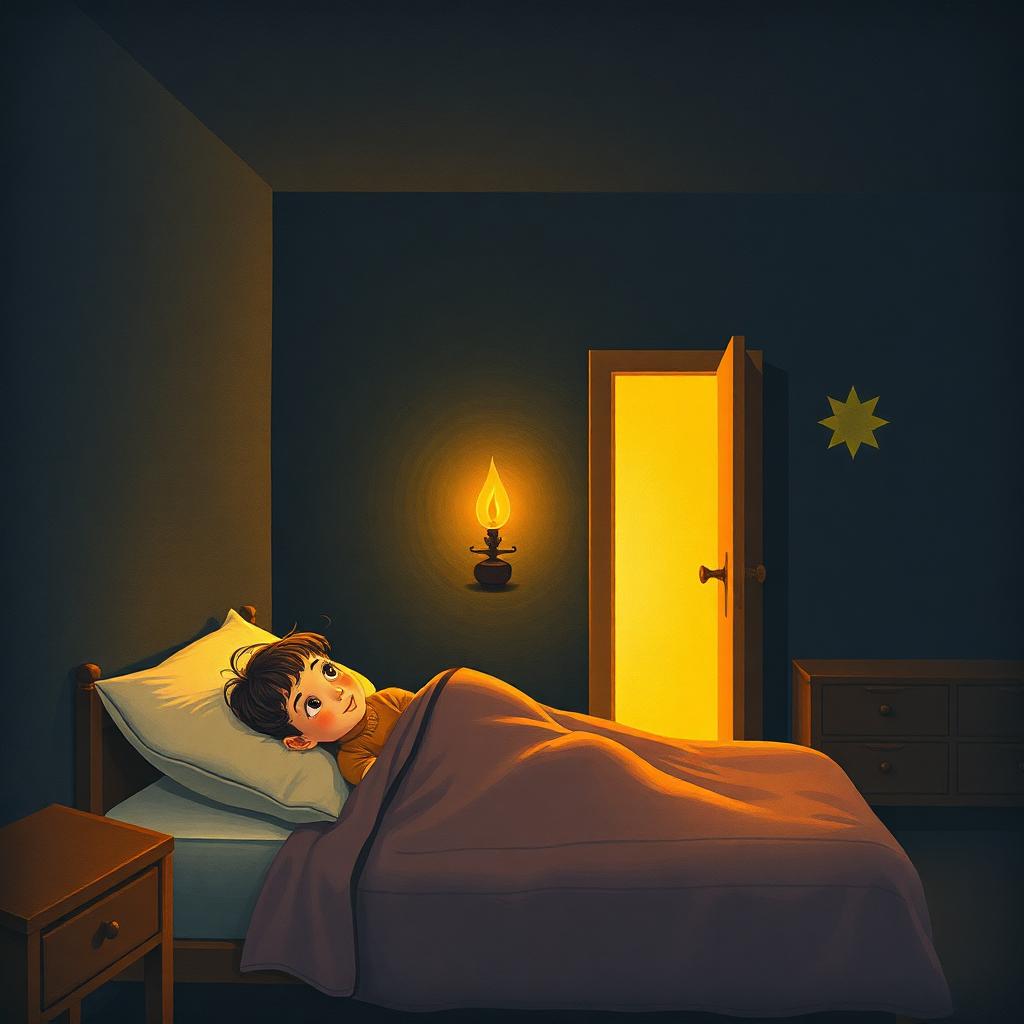
Zahra was eight years old, and she could not sleep, and it was not her fault.
Because tonight — tonight — the baby was coming.
Not at the hospital. Not in a car with everyone shouting and a bag by the door.
Here. In this house. In the warm little room at the end of the hallway.
Zahra lay very still in the dark and listened to the sounds of her house doing something it had never done before. Water running. Soft footsteps. Her grandmother's voice, low and calm, saying something in Arabic. Somebody laughing quietly.
And under all of it, like a river running beneath a floor:
The Quran.
Somebody had put it on hours ago, and nobody had turned it off.
Zahra pulled her blanket up to her chin. She was excited. And — she would only ever admit this to Allah — she was also scared.
Because how does a whole person come out of a person?
And what if something went wrong?
The Room That Was Not Scary
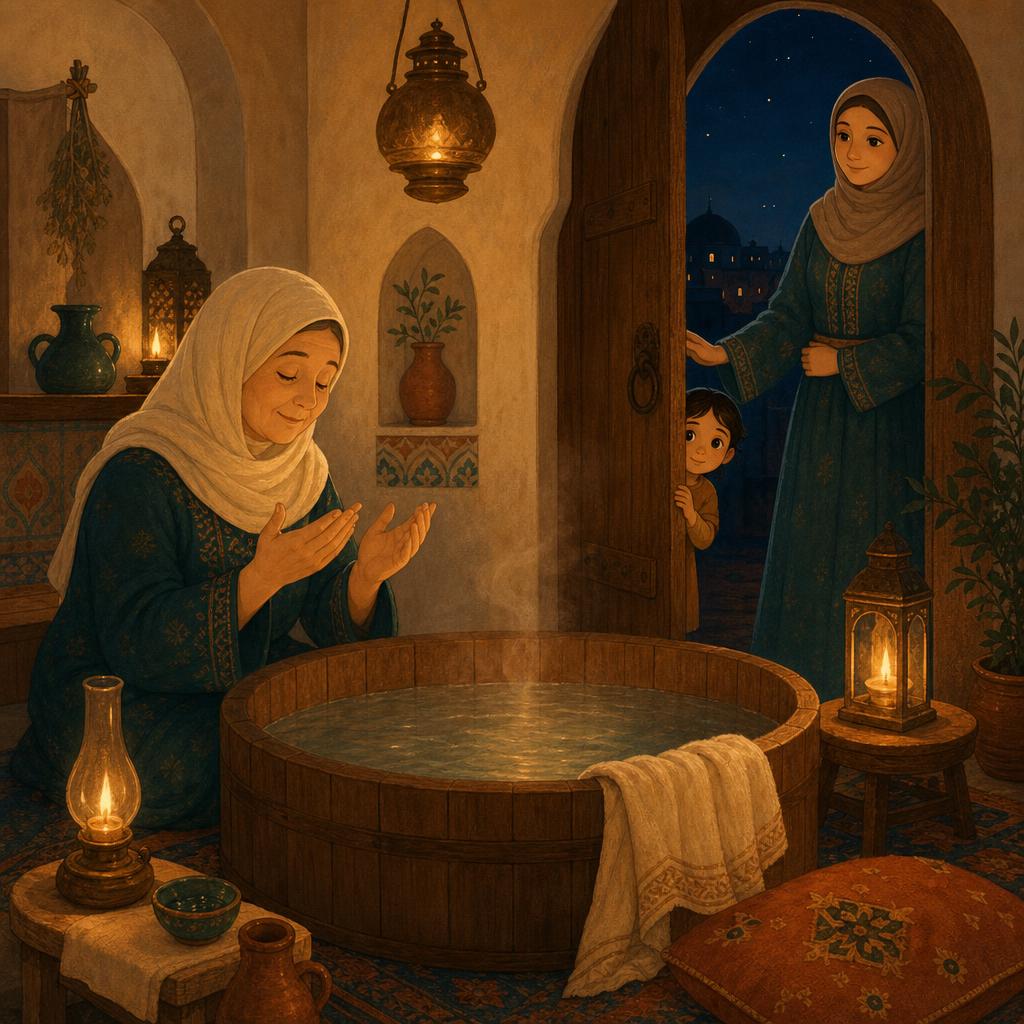
At some point in the deep part of the night, Zahra could not stand it anymore. She padded down the hallway in her socks, and she pushed the door open just a crack, and she looked.
It was not what she had imagined at all.
There were no bright white lights. Somebody had turned them all off and lit little warm lamps instead, so the whole room glowed like the inside of a lantern.
There were no machines beeping. There was no beeping at all.
There was warm water in a wide round pool, steaming gently.
There was her grandmother, sitting quietly in the corner with her hands lifted.
There was the midwife — a calm woman with kind eyes and very steady hands, who had been doing this for twenty years and had checked on Mama every single month.
And there was the Quran, still going, low and beautiful, filling every corner like the smell of bread.
Zahra had expected a hospital.
But this room did not look like a hospital at all.
It looked like a masjid at night.
Tie Your Camel
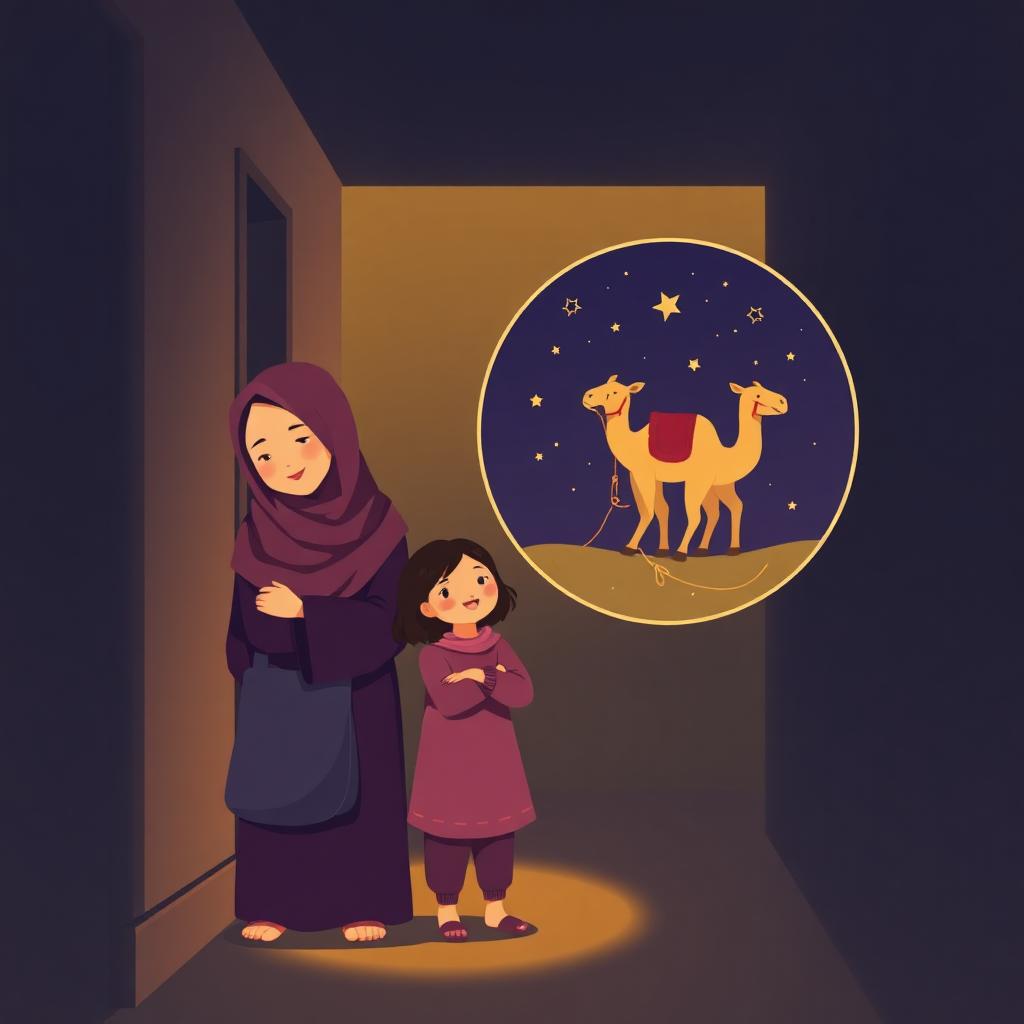
Her grandmother saw the crack in the door and did not tell her to go back to bed. She held out her arm, and Zahra folded into it.
"Tita…" Zahra whispered. "What if something goes wrong?"
Her grandmother did not laugh at the question. It was a good question. It deserved a real answer.
"Habibti, listen. Do you see that woman with the kind eyes? She trained for years and years to do this. Do you know how many times a doctor has checked your Mama and this baby? Every month. She listened to that little heartbeat with her own ears and said: this baby is well, this mother is strong.
And do you see that bag by the door, and the car keys on the hook? There is a hospital eleven minutes from this house. They already know we are here. They are ready, just in case."
Zahra thought about that.
"So… we're not just hoping it will be okay?"
"No, my love. There is a beautiful thing the Prophet ﷺ taught us. A man came to him and asked whether he should leave his camel untied and simply trust Allah to keep it safe.
And the Prophet ﷺ told him:
Tie your camel — and then trust in Allah."
She squeezed Zahra's shoulder.
"That is what real trust looks like, habibti. Not lazy. Not reckless. Trust with its sleeves rolled up. You do every single thing you can… and then you put it in the hands of the One who was going to decide it anyway."
And Zahra — who had been quietly frightened for about six hours — felt her shoulders come down from around her ears.
With It, Not After It
But the hard part was truly hard.
The hard part was hard.
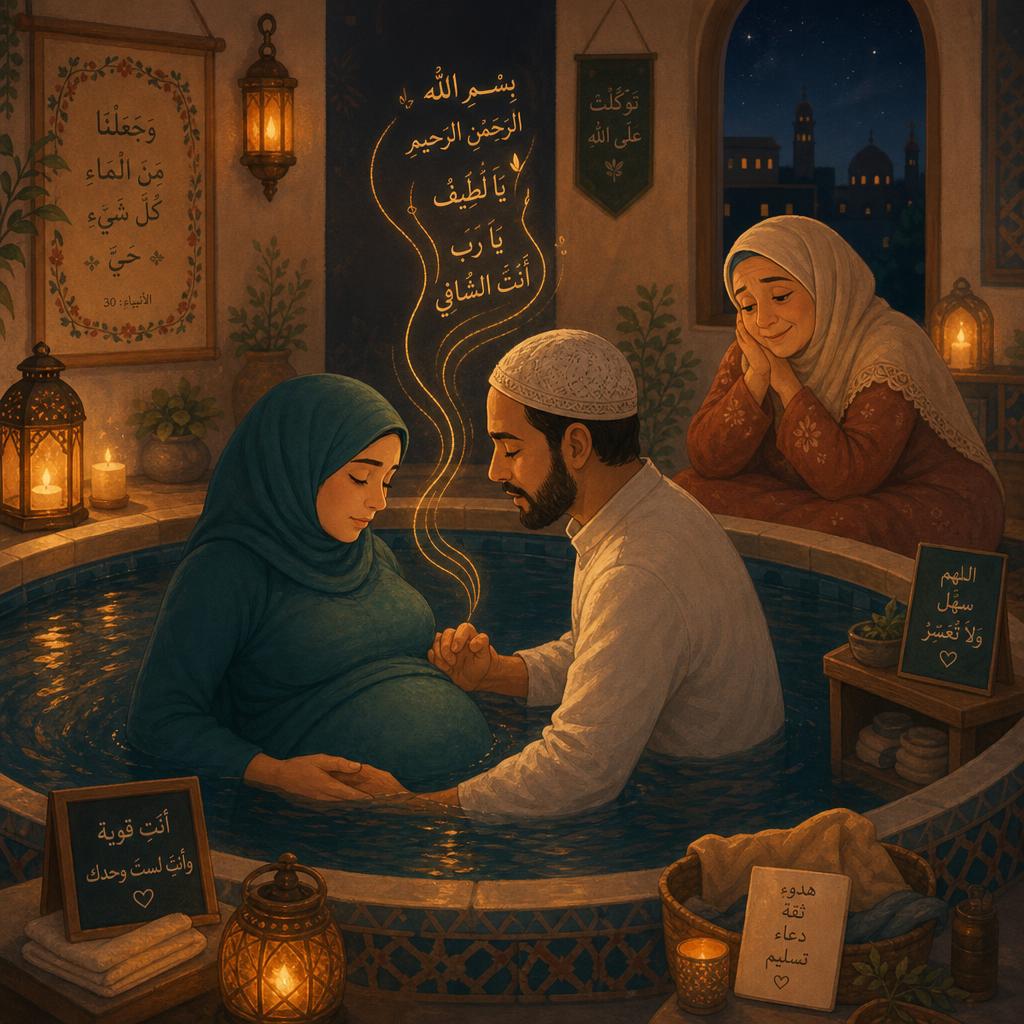
Zahra watched her mother do the oldest, bravest work there is. When the waves came, her mother did not scream. She breathed — long and low, like someone climbing a mountain who has decided not to stop.
And her father — this is the part Zahra never forgot — her father did not stand in a corner being useless and afraid.
He knelt right down in the water beside his wife. He held her. And out loud, over and over, not caring who heard him, he prayed:
"Ya Allah, make it easy for her. Ya Allah, make it easy for her."
Zahra's grandmother whispered into her hair:
"Do you know what Allah promised, habibti? Listen carefully. Not after the hardship. With it."
فَإِنَّ مَعَ الْعُسْرِ يُسْرًا
“Verily, with hardship comes ease.”
— Surah Ash-Sharh (94:6)
"Look around this room, Zahra. The hard part is happening right now — and where is the ease? It is already here. It is in the warm water. It is in her breath. It is in your father's du'a. It is in the Quran that has not stopped playing all night.
The ease did not come afterwards. Allah put it in the room while."
The Room Breaks Open
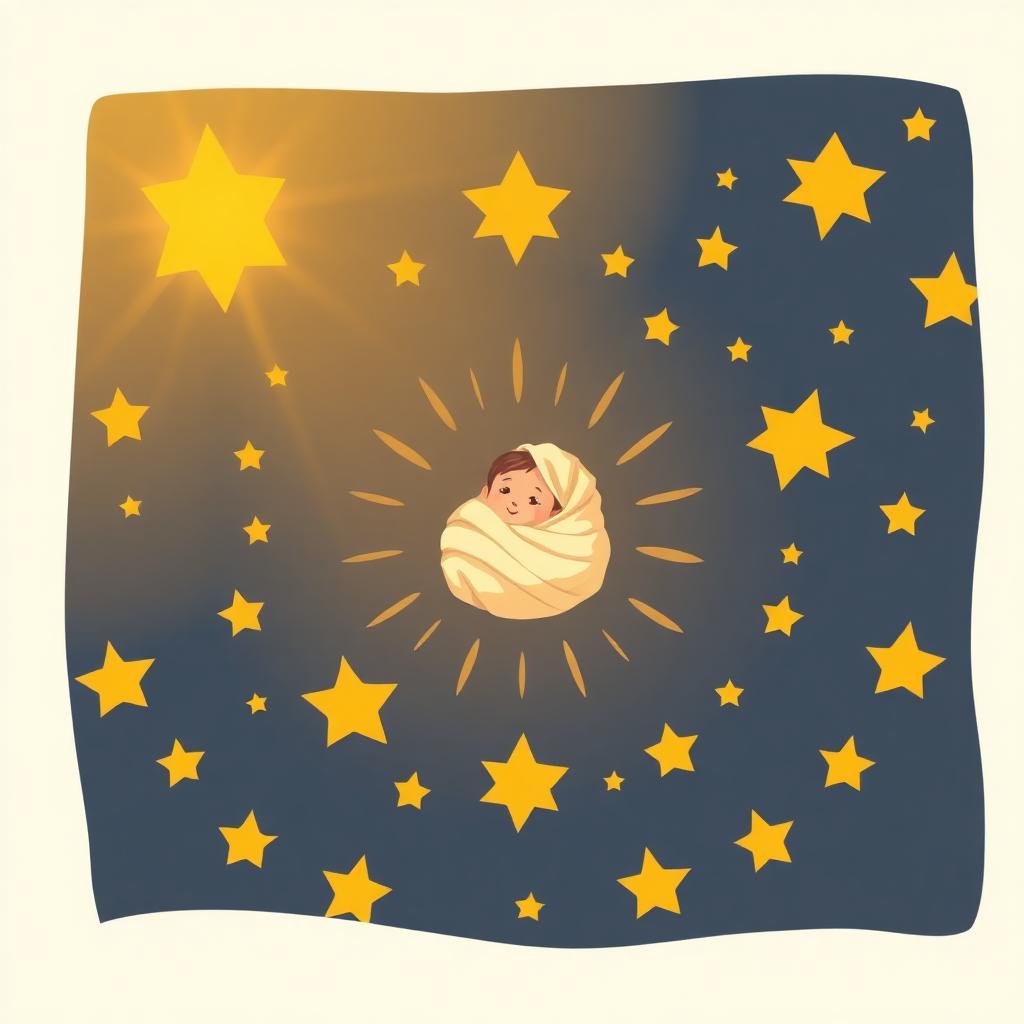
And then —
And then —
And then she came.
And the room did not fill with beeping.
The room broke open.
"ALLAHU AKBAR!"
"Alhamdulillah!"
"SubhanAllah — look at her, look at her!"
Everybody was saying it at once and everybody was crying at once and nobody was even a tiny bit embarrassed. Her grandmother had both hands over her mouth. The midwife was smiling with her whole face. Her father made a sound Zahra had never heard him make before, not once in her entire life.
And there, in the lamplight, wet and cross and brand new and furious about it —
was her sister.
They named her Leenda.
The First Sound She Ever Heard
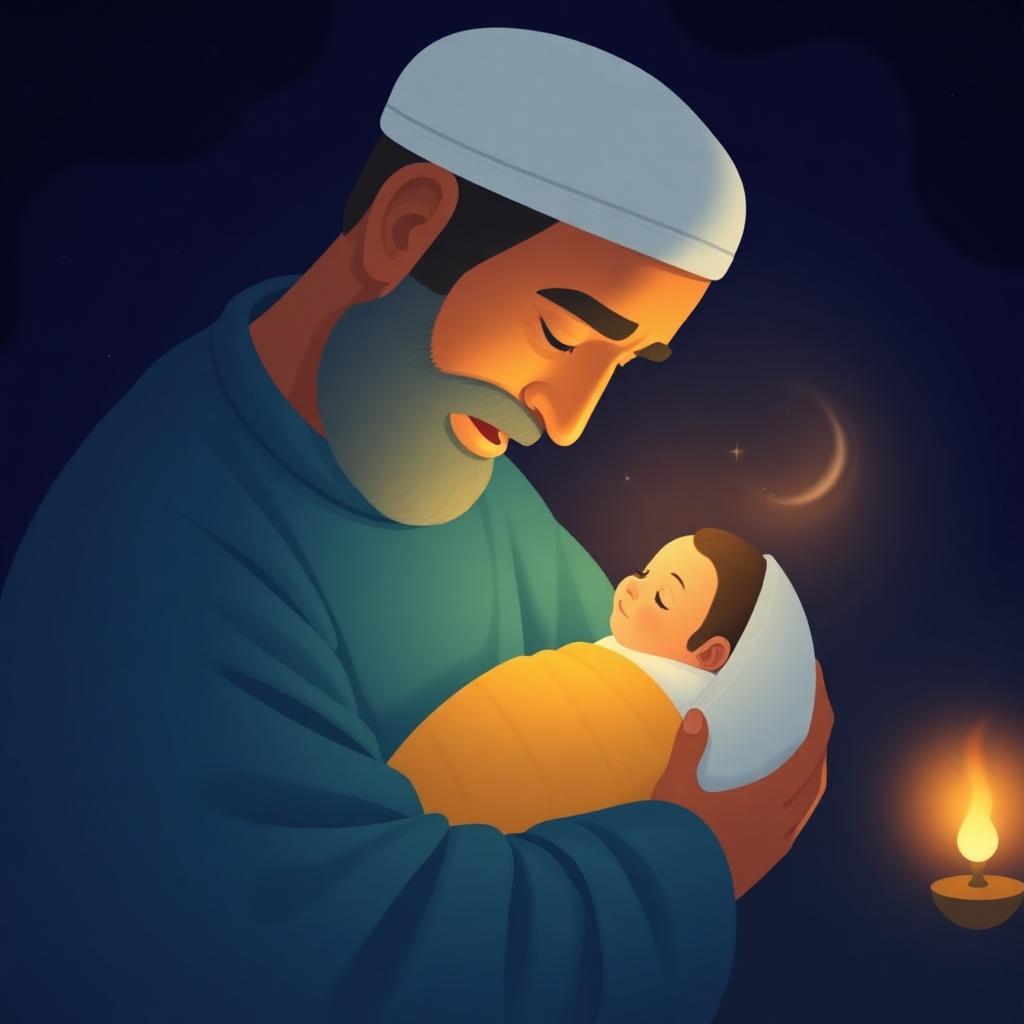
What happened next took about thirty seconds, and it would last Leenda her entire life.
Her father lifted her — this tiny, brand-new, one-minute-old person — and he brought her close to his face. And the whole room went quiet, because everybody knew what was coming.
He leaned down to her right ear.
And he called the adhan into it. Softly. The same words that are called from the top of every minaret in the world, five times a day, from Manila to Makkah to everywhere.
Allahu Akbar. Allahu Akbar.
Then he leaned to her left ear, and he called the iqama.
Zahra stood in the doorway with her heart going bang.
Because she had just watched something enormous, and she understood it completely, even at eight years old:
Leenda had lived in this world for sixty seconds.
She did not know what a face was. She did not know what light was. She did not know her own name, or her mother, or anything at all about anything.
And the first sound she ever heard — the very first — was the name of Allah.
Then her father touched a tiny piece of soft, sweet date to the roof of her mouth — the tahnik — exactly the way the Prophet ﷺ used to do for the babies people brought to him.
And then the midwife laid her, bare and warm, straight onto her mother's chest.
Nobody clapped. Nobody spoke.
The Quran just kept playing.
Nobody Was in a Hurry
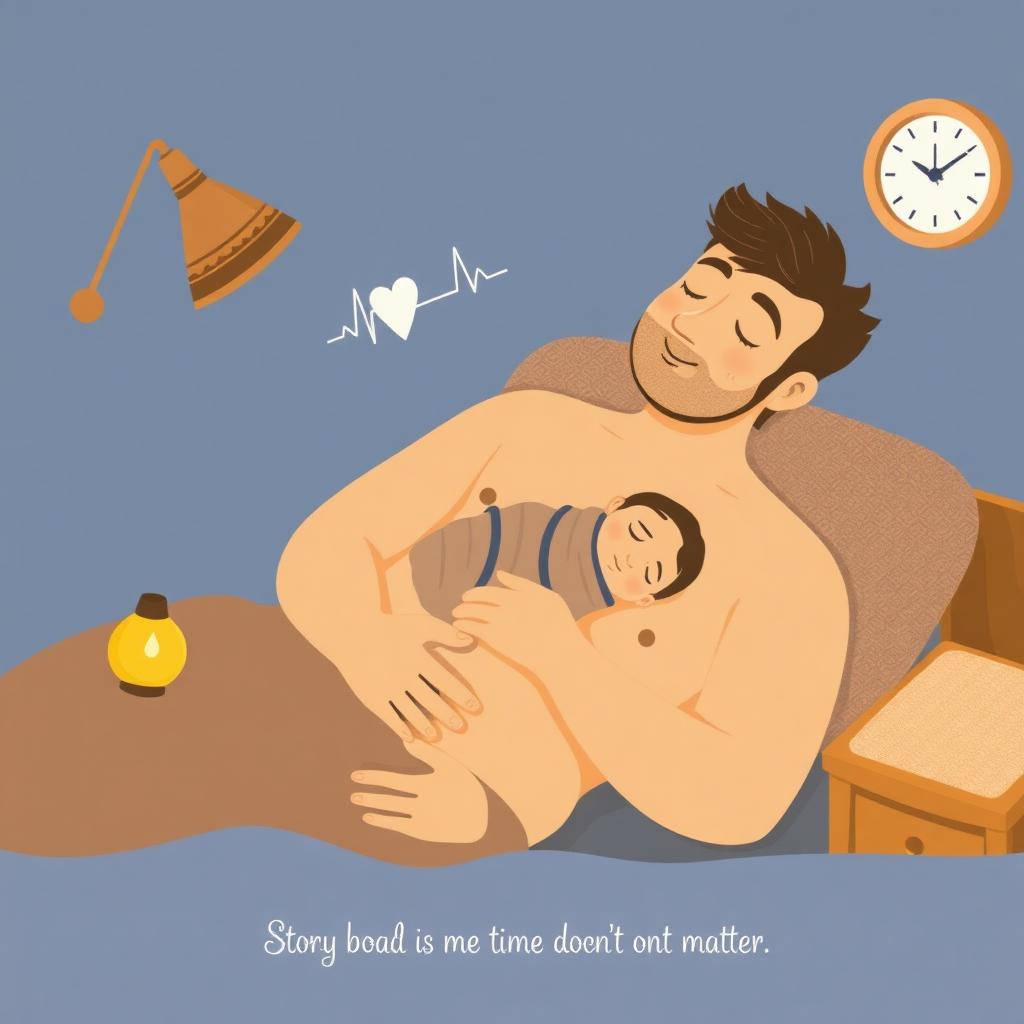
And what did not happen next mattered just as much.
Nobody snatched her away to be scrubbed and weighed and stamped like a parcel.
Nobody cut anything in a rush. The cord was left alone — still beating, still working, still quietly pushing every last drop of what already belonged to Leenda back into Leenda. Hours later, when it had finished its job and gone still all by itself, only then did they let it go.
Nobody hurried anything at all.
Later, when Mama was resting, they laid Leenda on her father's bare chest instead, so she could hear his heart too.
Zahra worked it out, and it made her feel something enormous:
Her sister had been in this world for hours and hours… and she had not touched a single cold thing. Not once. She had gone from a heartbeat, to a heartbeat, to a heartbeat.
That is how a soul is supposed to be welcomed.
The Forty Days
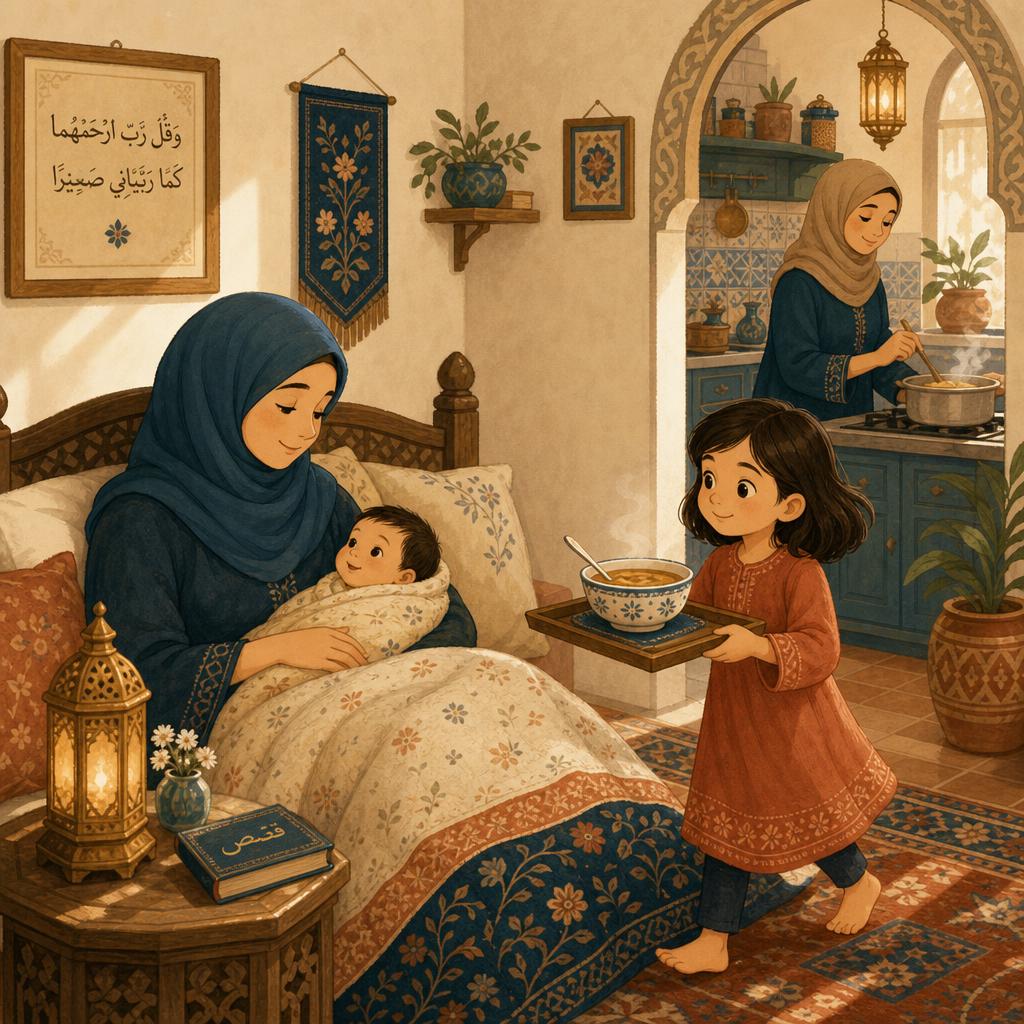
And then, because in this family the story did not stop at the baby, everybody turned around and took care of Mama.
For forty days.
An auntie came to cook, so Mama never once had to stand at a stove. Somebody was always ready to hold the baby so that Mama could sleep. The house got quieter and the food got warmer and everybody moved a little softer, for forty whole days.
And Zahra had a job — a real one.
She brought the soup. She held her sister's small hot head while Mama's eyes closed for twenty minutes. She learned to change a nappy without gagging (mostly).
"Why does Mama get forty days?" she asked once.
Her grandmother looked at her for a long moment.
"Because, habibti, your mother just did the work of creation. A woman who has done that should be served — not left alone to drown in it."
Zahra never forgot that either.
The First Word You Ever Heard
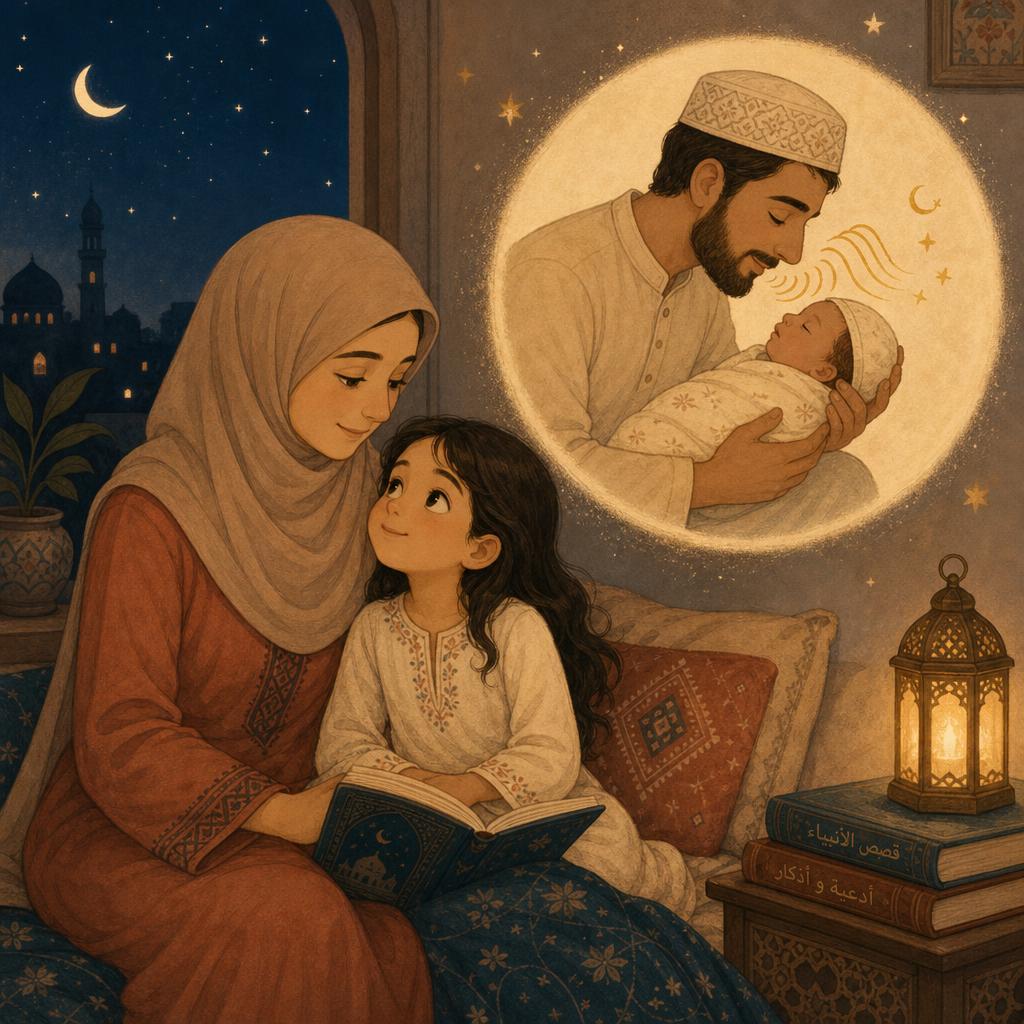
Weeks later, when the house had gone back to normal and Leenda had stopped looking like a cross little tomato, Zahra asked the question that had been sitting quietly inside her the whole time.
"Umi… when I was born…"
She did not even know how to finish it.
But her mother knew. Mothers always know.
"Yes, habibti," she said. "Somebody did it for you too."
Zahra sat down slowly.
"Your father held you when you were one minute old — smaller than you can imagine, and very cross about the whole business — and he leaned right down to your ear, and he called the adhan into it.
You did not know anything yet. You did not know the world. You did not know me. You did not know your own name.
But before you knew any of that…
you knew His."
This is what was whispered into your ear when you were one minute old.
اللهُ أَكْبَرُ، اللهُ أَكْبَرُ
Allahu Akbar, Allahu Akbar
Allah is the Greatest, Allah is the Greatest
أَشْهَدُ أَنْ لَا إِلَهَ إِلَّا اللهُ
Ashhadu an la ilaha illa Allah
I bear witness that there is no god but Allah
أَشْهَدُ أَنَّ مُحَمَّدًا رَسُولُ اللهِ
Ashhadu anna Muhammadan rasulullah
I bear witness that Muhammad is the Messenger of Allah
You did not understand a single word of it.
It went in anyway.
Allahumma ij'al awladana min as-saliheen. Allahumma ihfadh-hum min kulli sharr. Allahumma-rzuqhum hubb al-Quran wa hubb an-Nabi ﷺ.
O Allah, make our children among the righteous. O Allah, protect them from every harm. O Allah, grant them love for the Quran and love for the Prophet ﷺ. O Allah — You were the first word in their ears. Be the last word on their tongues.
Ameen.
For new big brothers and sisters to try
- 1
Ask for your own story. Ask who called the adhan in your ear, and where, and what the room was like. Then remember it forever — it is yours.
- 2
Tie your camel. Whenever you are scared of something: do every single thing you can to be ready — and then hand it to Allah. That is not two steps. It is one.
- 3
Look for the ease inside the hard thing. Allah did not say ease comes after. He said with. Next time something is hard, look around the room. Find where He hid the ease.
- 4
Serve the mother. Bring the water. Hold the baby. Be quiet in the hallway. A woman who has just done the work of creation should be served.
- 5
Give the first word. One day, insha'Allah, you may hold a brand-new person. Lean close. Give them the name of Allah before you give them anything else.