The Garden in My Chest
a story about a boy, a city, and the Book he was learning by heart
by Rayda Edding
Bismillah ir-Rahman ir-Raheem.
بِسْمِ اللَّهِ الرَّحْمَٰنِ الرَّحِيمِ
The City That Wakes You
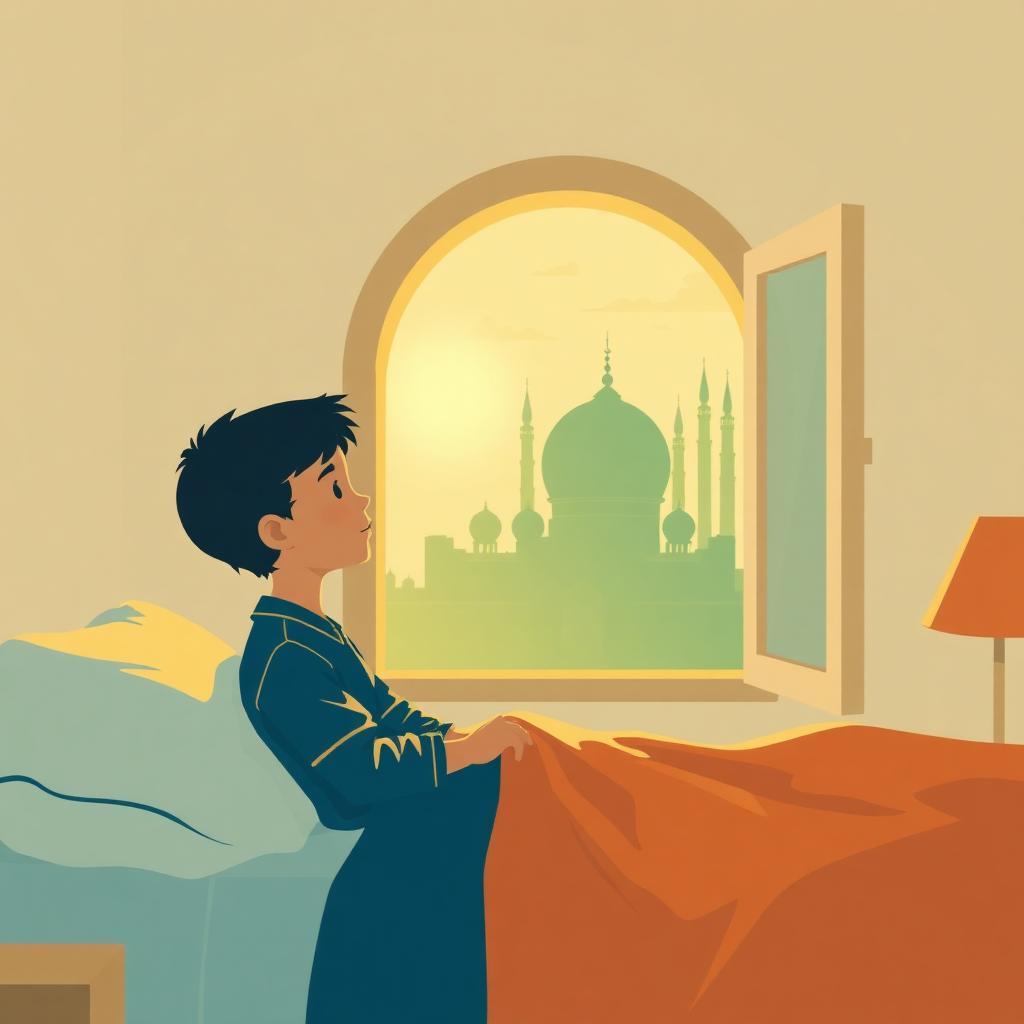
Tariq was eight years old, and he lived in the most beautiful city in the world.
Tariq did not wake up to an alarm clock. Alarm clocks are for people who live in ordinary places.
Tariq woke up to the adhan from the Masjid of the Prophet ﷺ.
It came floating through his window in the dark, across the rooftops of Madinah, in a voice so beautiful it made the inside of his chest go quiet.
Allahu Akbar… Allahu Akbar…
And Tariq would open his eyes and remember, the way he remembered every single morning and never once got used to:
I live in his city.
The city the Prophet ﷺ walked in. The city he loved. The city he made du'a for — O Allah, make us love Madinah as we love Makkah, or even more.
Tariq's feet touched the cold floor. Somewhere below, he could hear his mother already moving in the kitchen.
And under his ribs, waiting for him, was the thing that made every single day of his life different from most children's days.
Today, there was a new page.
Sabaq
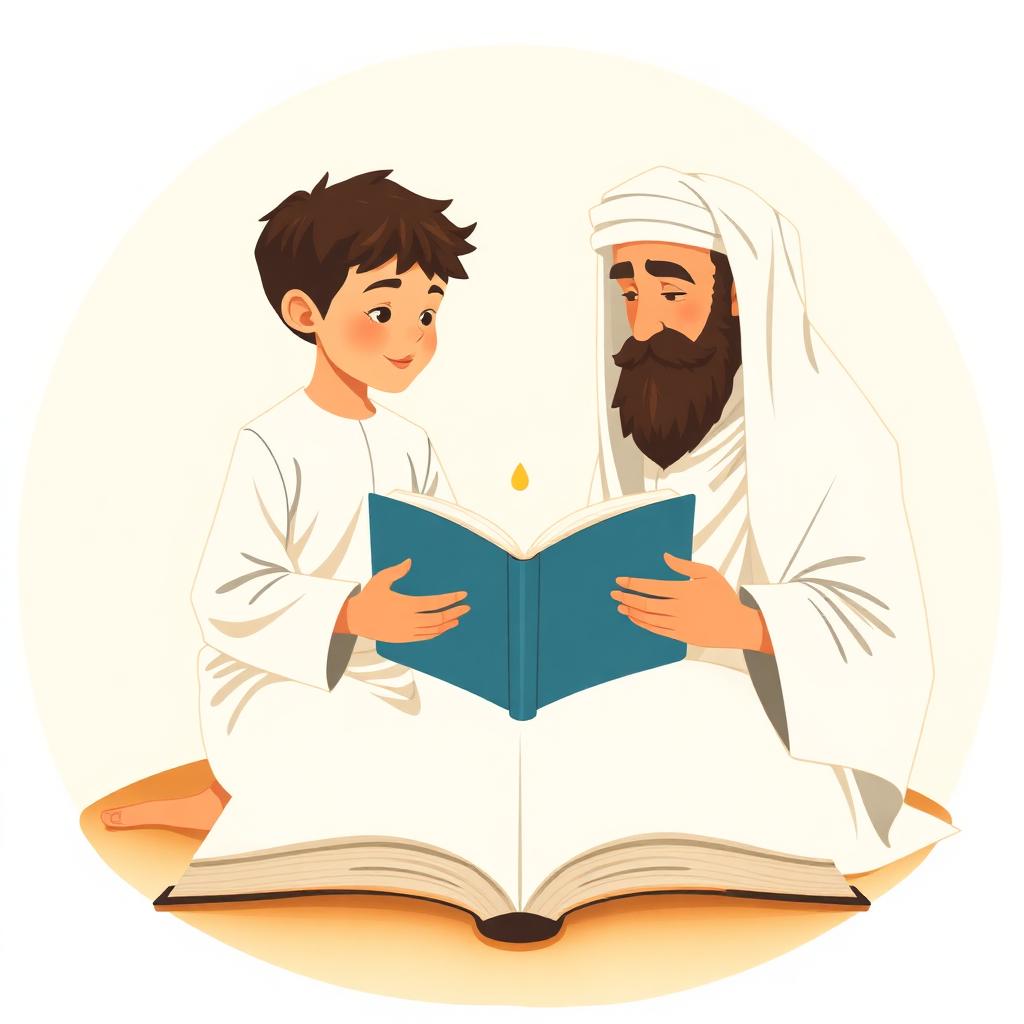
Tariq's mornings did not work the way most children's mornings work.
Every day, Tariq had three jobs.
Sabaq — the new lesson. Today's page. The fresh one.
Sabqi — the pages from the last few weeks, still soft, still learning how to stay.
Manzil — everything else. Everything he had ever memorised in his whole life, going all the way back.
That morning, Sheikh Nuh opened the mushaf to Tariq's new page, and Tariq looked at it —
and his heart sank a little.
It looked like so many words.
Twelve lines. Twelve lines that did not want him. Twelve lines that sat there on the page looking exactly like twelve other lines, and none of them would go in.
He read the first ayah.
He read it again. And again. And again. And again.
Eleven times. Fourteen times. His tongue got tired and his eyes started sliding off the page like feet on wet marble.
And then —
something clicked.
It was the kind of click that comes when a child has been pushing at a door for twenty minutes and suddenly it is not a door anymore, it is an opening.
The ayah went in. And it stayed.
Tariq looked up at Sheikh Nuh with his whole face shining, and Sheikh Nuh — who has taught four hundred boys and has seen that exact face four hundred times and loves it every single time — just smiled and tapped the page.
"Next one."
The Mountain Behind Him
There is a part of hifdh that nobody talks about, and it is the reason so many children give up.
The new page is not the hard part.
The hard part is everything behind you.
Because every single page Tariq memorised was a page he now had to keep. Forever.
Ten pages? Easy. Fifty pages? Fine.
But Tariq had six hundred pages behind him now. Six hundred. And every one of them was quietly waiting to be visited, and if he did not visit them — they slipped.
One day he opened to a surah he had known perfectly a year ago, and it was… wobbly. Loose. Like a tooth.
And Tariq — eight years old, in the most beautiful city in the world — put his head down on the desk and said the thing that every single hafidh has said at least once:
"Sheikh. I think I'm going backwards."
And Sheikh Nuh did not tell him to work harder.
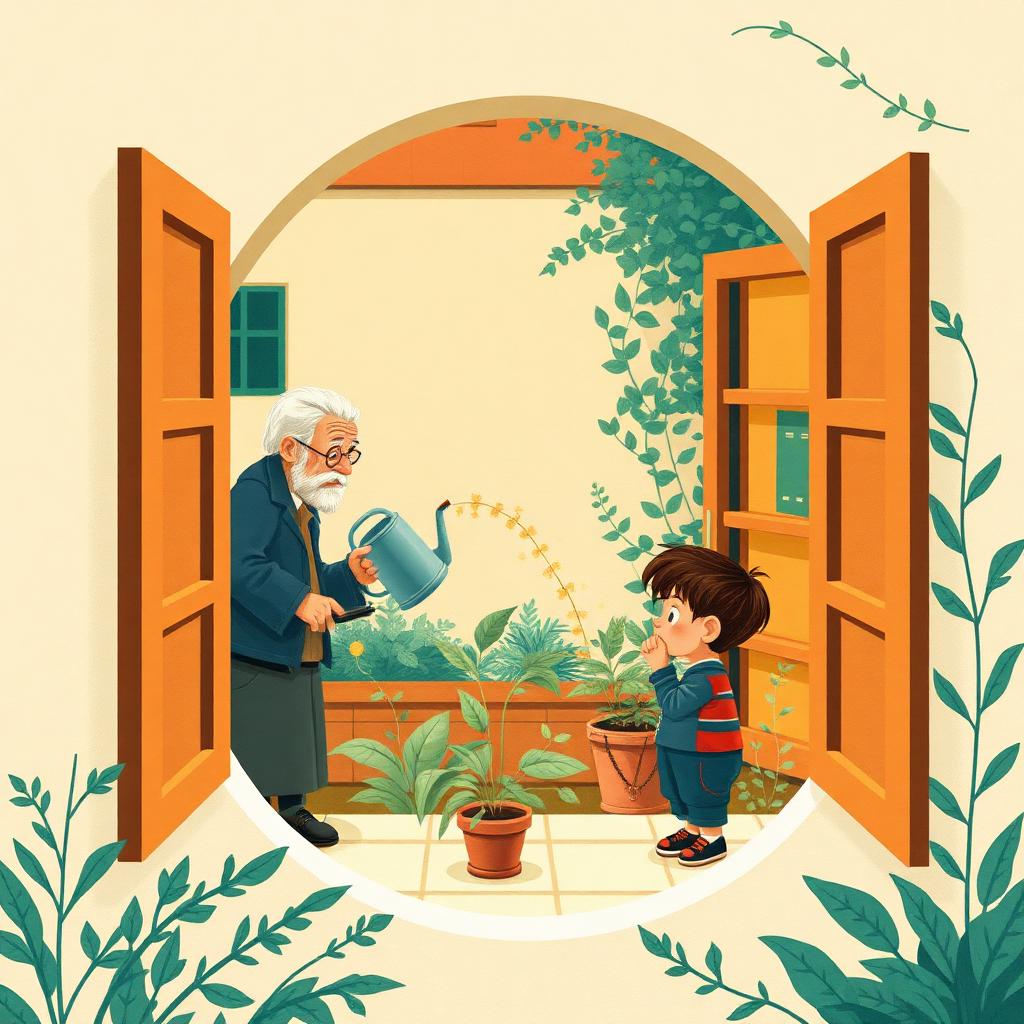
He said: "Tariq. Come and look out of the window."
Outside, in the courtyard, there was a small garden.
"Do you see that? Now tell me — when the gardener plants a seed, is he finished?"
"…No."
"Why not?"
"Because… he has to water it. Or it dies."
"So is he going backwards? Every morning, when he waters what he planted last year instead of planting something new — is that going backwards?"
Tariq thought about it for a long moment.
"…No. That's just… the garden."
"That is just the garden, habibi." Sheikh Nuh put his hand on Tariq's shoulder. "Hifdh is not a ladder you climb and leave behind you. It is a garden in your chest. The new page is planting. The revision is watering.
And a gardener who only ever plants and never waters does not have a garden.
He has a graveyard."
And then he told Tariq the promise — the one Allah made to every single person who has ever sat down with a heavy heart and a fresh page:
وَلَقَدْ يَسَّرْنَا الْقُرْآنَ لِلذِّكْرِ فَهَلْ مِن مُّدَّكِرٍ
“And We have certainly made the Quran easy to remember. So is there any who will be reminded?”
— Surah Al-Qamar (54:17)
"Do you hear that, Tariq? He made it easy. Allah Himself says so. It is the only book on this earth that a thousand eight-year-olds can carry inside their chests, word for word, in every country in the world.
Nothing else in human history does that. Nothing.
So when it feels heavy — that is not the Book being hard, habibi.
That is you needing water."
Umm Tariq's Kitchen
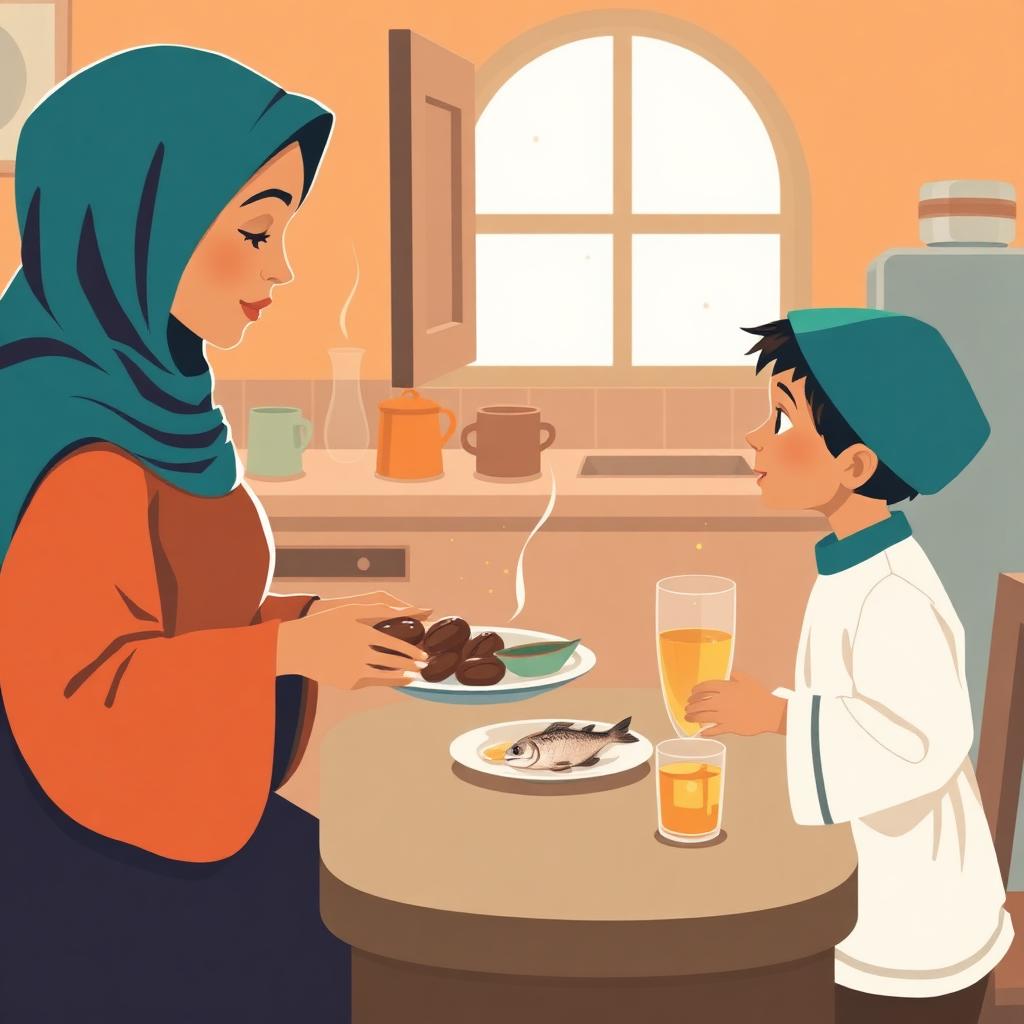
The kitchen was where the second secret lived.
Umm Tariq was not a woman who thought food was just food.
"Tariq," she would say, sliding the plate across, "what are you doing today?"
"Memorising."
"With what?"
"…My brain?"
"And what is your brain made of? Air? Wishes?"
Every single morning began the same way. Dates — because the Prophet ﷺ loved them, and because they wake up a tired brain faster than anything in a packet. A spoon of honey in warm water, because Allah Himself said there is healing in it. Olive oil, from the blessed tree. Fish on Wednesdays. Water, water, water, and more water.
And no — Tariq did not want the fish.
There were negotiations. There were debates. There was one memorable incident involving a courgette.
But here is what Tariq noticed, and it took him about a year to notice it:
On the fish days, the page went in faster.
On the days he had nothing but sugar and biscuits, his brain was like a car with sand in the engine — turning over, coughing, refusing to start.
And one day he said it out loud at the table: "Umi. The food is part of the hifdh, isn't it."
And Umm Tariq put down the pan and looked at him for a long moment.
"Habibi," she said. "It took your father eleven years to work that out."
The Bow That Never Broke
But the greatest secret in that house was not the food.
It was what happened at four o'clock.
Because at four o'clock, the mushaf closed.
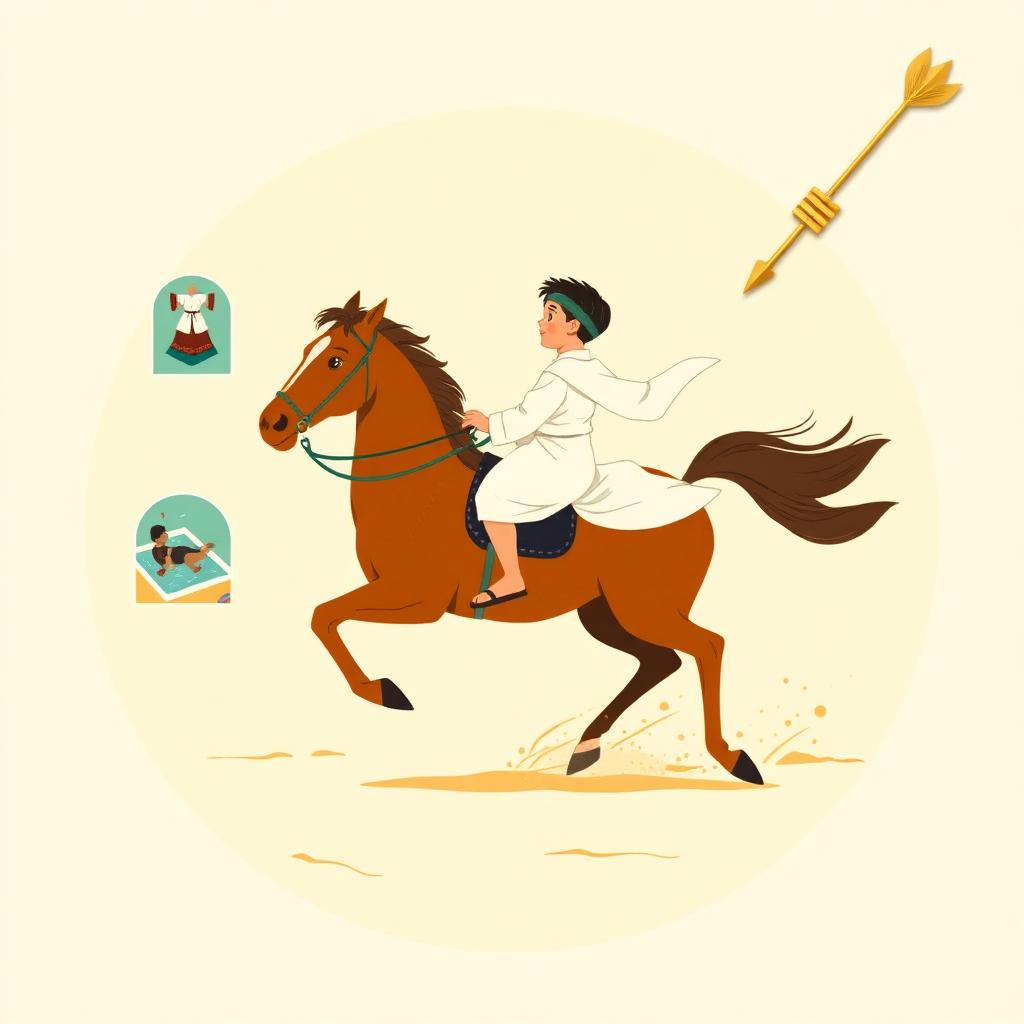
And Tariq — the boy with six hundred pages in his chest — went and got on a horse.
Chin up, back straight, that particular fierce joy on his face that only exists on a boy who is going faster than he is technically allowed to go.
On Mondays and Wednesdays: judo. The mat, the grip, the fall. Learning to be thrown and to get back up — which, if you think about it, is the most useful skill anybody has ever learned.
And Tuesdays and Thursdays: swimming. Where a boy who spends his mornings sitting perfectly still gets to be a torpedo.
Now — a visitor came to the house once. A well-meaning man. He watched Tariq thunder past on that horse and he frowned.
"Brother… mashaAllah, but — a hafidh? On a horse? Should he not be revising? Every hour counts."
And Abu Tariq smiled and said the thing Tariq never forgot.
"Do you know Hanzala?"
Hanzala (radiyallahu anhu) was a companion. And one day he came running to Abu Bakr (radiyallahu anhu) in a panic, saying: "Hanzala has become a hypocrite!"
Why? Because when he sat with the Prophet ﷺ his heart was on fire with iman — and then he went home to his wife and his children and his ordinary life, and… he relaxed. He laughed. He forgot, a little.
And he thought that made him a fraud.
So the two of them went to the Prophet ﷺ, terrified.
And listen to what he ﷺ said:
“By the One in whose Hand is my soul — if you remained as you are when you are with me, and in remembrance, the angels would shake your hands in your beds and on your paths. But O Hanzala — sa'atan wa sa'atan. There is a time for this, and a time for that.”
— Sahih Muslim
Sa'atan wa sa'atan.
An hour and an hour.
"That is not permission to be lazy," said Abu Tariq. "That is our Prophet ﷺ telling us how a human being is actually built.
A bow that is always drawn — always tight, always pulling, never resting — does not become a stronger bow.
It snaps.
I am not taking my son away from the Quran when I put him on that horse, brother.
I am making sure that in ten years, he can still lift the bow."
Alexandria
And then, once or twice a year, something even better happened.
Abu Tariq would come in on a Thursday evening with a particular look on his face and say four words:
"Shid shantak, ya Tariq." Pack your bag.
Alexandria.
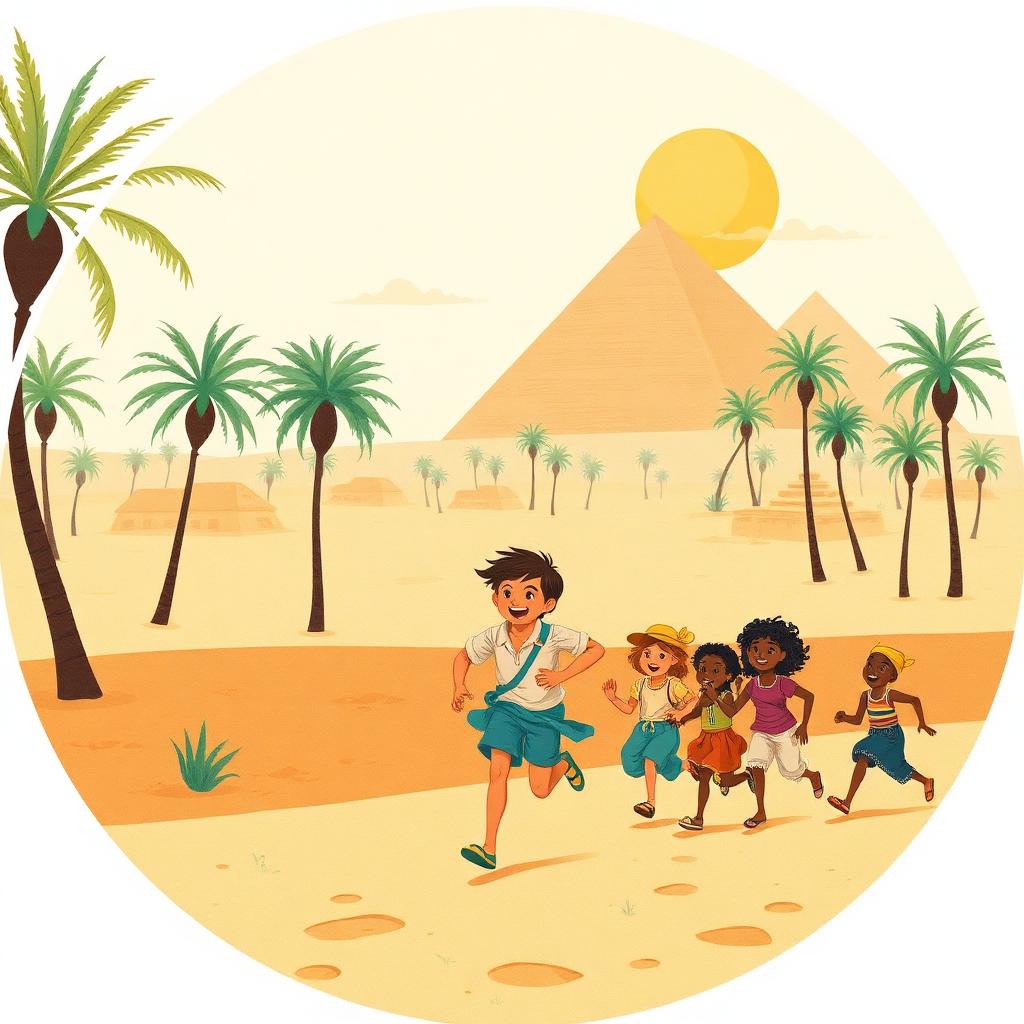
Baba's city. Where the aunties squeeze your cheeks until they hurt and shout "ya habibi, ya 'assal, ta'ala hena!" — come here, my honey — and then feed you until you cannot stand. Where the cousins are loud and completely out of control and absolutely wonderful, and everything is "khalas, yalla bina!" — okay, let's go! — from morning until night.
Where breakfast is ful medames and ta'meya — the Alexandrian falafel, green inside and crunchy outside — with warm eish baladi straight from the oven. Where lunch is sayadeya, the fisherman's rice, and grilled bouri and samak singari pulled that morning from the sea. Where the streets in the evening smell of koshari and roasted corn, and Baba buys everyone cold sobia and 'aseer asab — fresh sugar-cane juice — to drink.
Where the Mediterranean at the Corniche is a completely different colour from the sea at Yanbu, and Tariq wanted to know why, and nobody knew, and they argued about it happily for an entire afternoon while the waves crashed against the stones below Qaitbay fort.
Where Baba took him to the great new library — the Maktabat al-Iskandariya — and said, "Bosss, ya Tariq. Look. A city that has loved books for two thousand years. And you, ya ibni, are carrying the greatest Book of all inside your chest right now, wallahi."
And something enormous happened inside Tariq's chest.
For ten days, there was no sabaq. No sabqi. No manzil.
There was just a boy in the sun with his cousins, being eight, with sticky basbousa fingers and salt in his hair.
And Tariq's mother watched him from a balcony one evening — sunburnt, filthy, laughing at something a cousin had said, absolutely and completely 'ala keifo —
and she said quietly to her husband:
"Look at him. He is filling up."
The Thing Nobody Expected
And here is the part that surprised everyone.
On the ninth day in Egypt, in the middle of all that sun and noise and cousins —
Tariq went quiet.
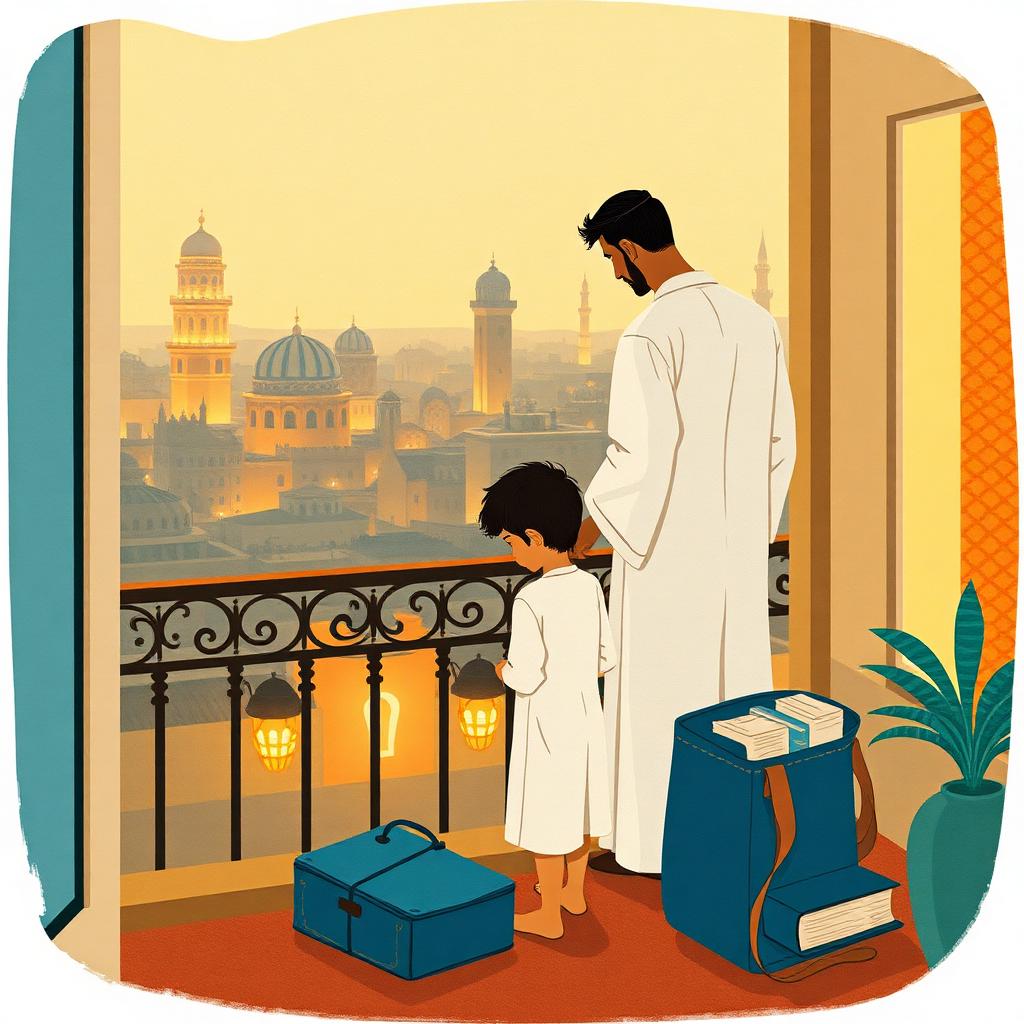
He found his father on the balcony in the evening and stood there for a bit, the way children do when they have something to say and have not worked out how to start it.
"Baba…"
"Mm?"
"Did we bring my mushaf?"
Abu Tariq turned around very slowly.
"…Why?"
And Tariq looked at his feet, and went slightly red, and said the sentence that his father repeated to his mother that night in a voice that was not entirely steady:
"I miss it."
Not I'm behind. Not I'll get in trouble. Not Sheikh Nuh will be angry.
I miss it.
Something had just happened on that balcony that no schedule could have produced.
Ten days of horses and cousins and the Nile and the sea had not pulled Tariq away from the Quran.
They had made him thirsty for it.
That is what rest does. That is the whole secret, and almost nobody believes it:
A child who is never allowed to leave the Quran learns to resent it.
A child who is allowed to leave — and comes back on his own two legs, because he missed it — has fallen in love with it.
And that cannot be forced. Not ever. Not with a schedule, not with a rule, not with a raised voice.
A parent can only build a life so warm and so wide and so full of light that the Quran sits at the centre of it looking like the best thing in the room.
Because it is.
Abu Tariq put his hand on his son's head and did not say a word for a long time.
Then he said: "Yes, habibi. I brought it. It's in the blue bag."
And he had. He had packed it on the very first day.
Because he had been hoping.
The Crown
They flew home. The adhan woke him. The mushaf opened. The garden got watered.
And one Tuesday, months later, Tariq finished a surah he had been fighting with for eleven weeks — and Sheikh Nuh sat back in his chair and looked at him.
"Tariq. Do you know what you are building?"
"…Hifdh?"
"No, habibi. Listen to me carefully, because I want you to hear this on a day when nothing special is happening, so that you never forget it."
“Whoever recites the Quran, learns it, and acts upon it — on the Day of Resurrection his parents will be dressed with a crown of light, brighter than the light of the sun in your worldly homes. So what do you think of the one who himself acted upon this?”
— Sunan Abi Dawud
Sheikh Nuh leaned forward.
"Do you understand what that means, Tariq?
Every page you plant. Every page you water. Every fish you ate that you did not want. Every morning you got up when the bed was warm.
You are making a crown.
For a woman who has cooked you breakfast at 4:30 in the morning for three years. For a man who put a mushaf in a blue bag and did not say anything about it.
They will not see it in this world. They will see it on a Day when the sun is closer than you can imagine — and they will be wearing light.
Because of you.
Because of a boy who kept going."
Tariq did not say anything.
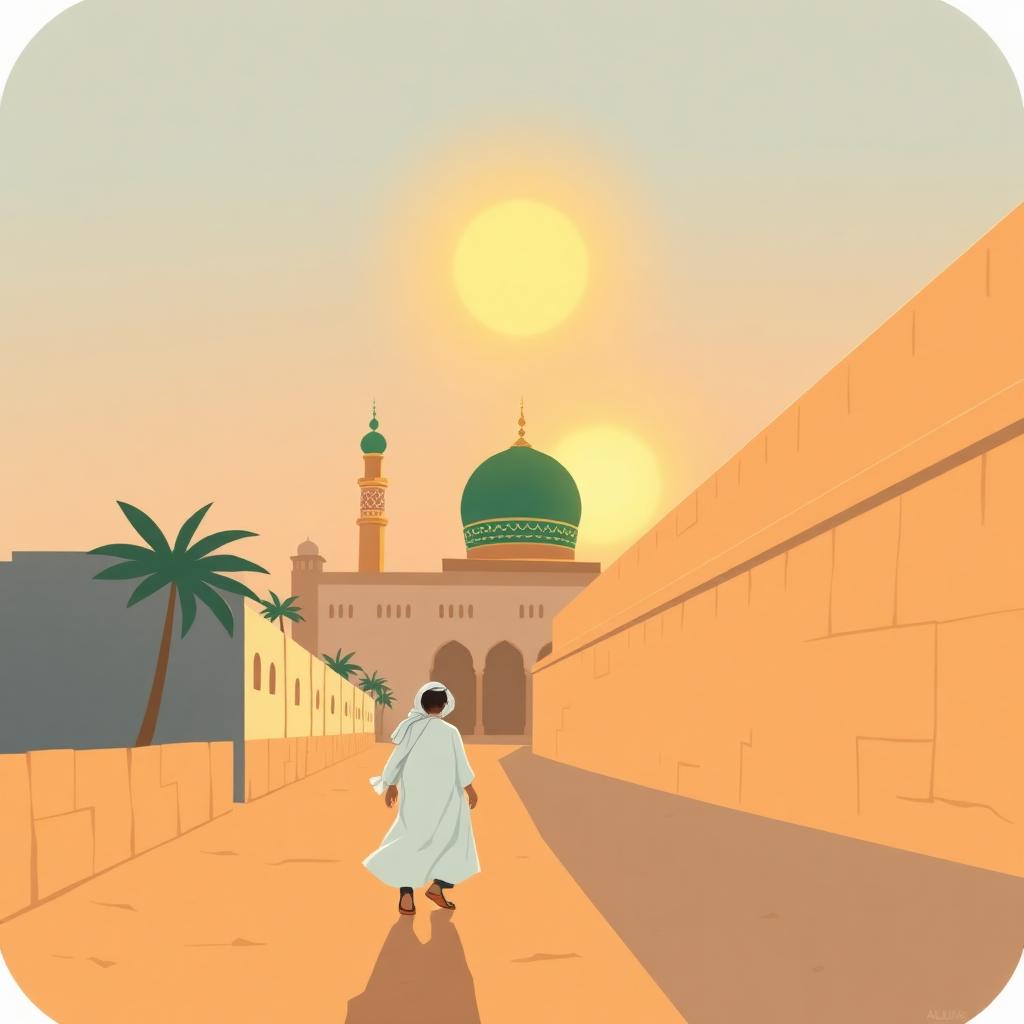
He walked home through the streets of Madinah, past the walls of the masjid where the Prophet ﷺ is buried, in the city that wakes you with the most beautiful sound in the world —
and he did not feel like he was carrying a heavy book anymore.
He felt like the Book was carrying him.
And somewhere, on the same evening, there was another child sitting with a page that would not go in — a child with five surahs, or fifty pages, or six hundred, who had put his head down on the desk and thought: I am going backwards.
He was not.
He had a garden in his chest.
He only needed to plant something small that day. Then water what he had planted the year before. Then eat something that helped him. Then close the book —
and go and get on the horse.
Because a bow that is always drawn will break.
And Allah, who made the whole sky, has personally promised — in a Book that a million children have carried in their chests — that He made this thing easy.
He does not lie.
The child was just thirsty.
He only needed to drink.
Tariq's Day
The whole secret, on one page.
- Sabaq — plant something new. Even four lines. Even one.
- Sabqi — water this month's garden.
- Manzil — visit the old part of the garden, so it never forgets you.
- Fuel it — dates, honey, water, real food. Your brain is not made of biscuits.
- Then CLOSE THE BOOK. Run. Swim. Ride. Fall down and get up.
- Sa'atan wa sa'atan. An hour and an hour.
- And rest properly, on purpose — because the boy who is allowed to leave is the boy who comes back missing it.
Allahumma-j'al al-Qur'ana rabi'a qulubina, wa noora sudoorina.
O Allah, make the Quran the spring of our hearts and the light of our chests. O Allah, You promised that You made it easy — so make it easy for us. Plant it in our children, water it with Your mercy, and let it be a crown of light for every parent who woke early and hoped quietly.
Ameen.
For young gardeners to try
- 1
Plant something small today. Not the whole page. Four lines. The gardener who waits for a perfect morning never plants anything at all.
- 2
Water before you plant. Revise first. Always. A garden with no water is not a garden — it is a graveyard.
- 3
Eat like it matters. Dates in the morning. Honey. Water before you are thirsty. Your brain runs on what you give it, and it cannot run on sugar and hope.
- 4
Close the book at four o'clock. Then go and be eight. Sa'atan wa sa'atan — an hour and an hour. A bow that is always drawn will snap.
- 5
Let yourself miss it. Take the holiday. Go to the sea. And then notice — quietly, on about day nine — the moment you start wanting it back. That feeling is worth more than a hundred forced hours.