The Masjid With My Name On It
a story about the gift that never stops
by Rayda Edding
Bismillah ir-Rahman ir-Raheem.
بِسْمِ اللَّهِ الرَّحْمَٰنِ الرَّحِيمِ
Based on a true story.
The Photograph on the Wall
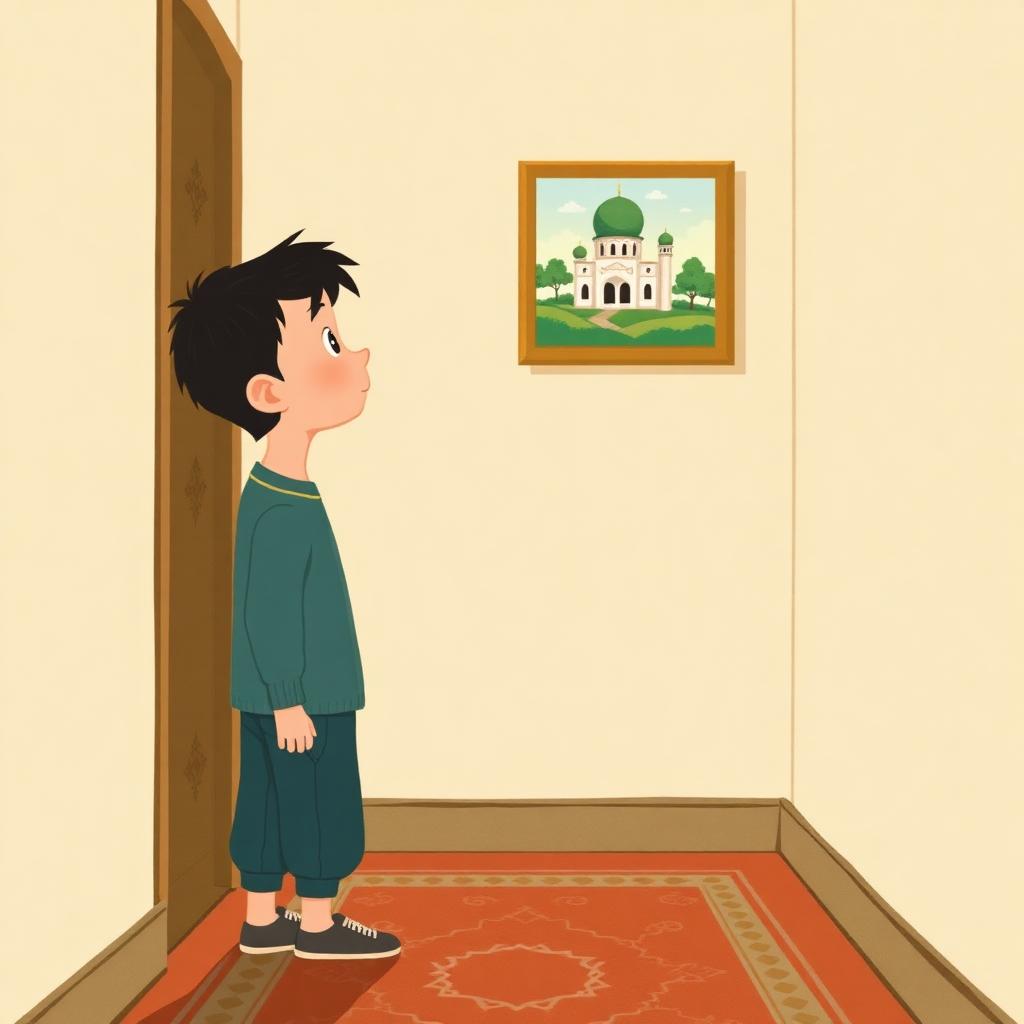
Tariq was seven years old, and he had walked past that photograph about nine thousand times.
It hung in Inah's hallway in a plain wooden frame. A small white building with a green roof and one little dome, standing in a village full of palm trees. Nothing special. Just a picture.
Then one afternoon, waiting for Inah to finish making the tea, Tariq stopped and actually looked at it.
And he saw the sign above the door.
He sounded it out slowly, the way you do:
MASJID HAMZA.
His own name. On a building. On the other side of the world.
"INAH!" he shouted, so loudly she nearly dropped the teapot. "Inah, there's a masjid with my NAME on it!"
Inah came into the hallway, wiping her hands, and stood beside him. She looked at the photograph the way people look at things they love.
"Yes, habibi," she said. "There is."
"But — why? Who put my name on a masjid?"
Inah smiled a smile with about a hundred years folded inside it.
"I did," she said. "When you were three days old."
The Question That Would Not Leave Her
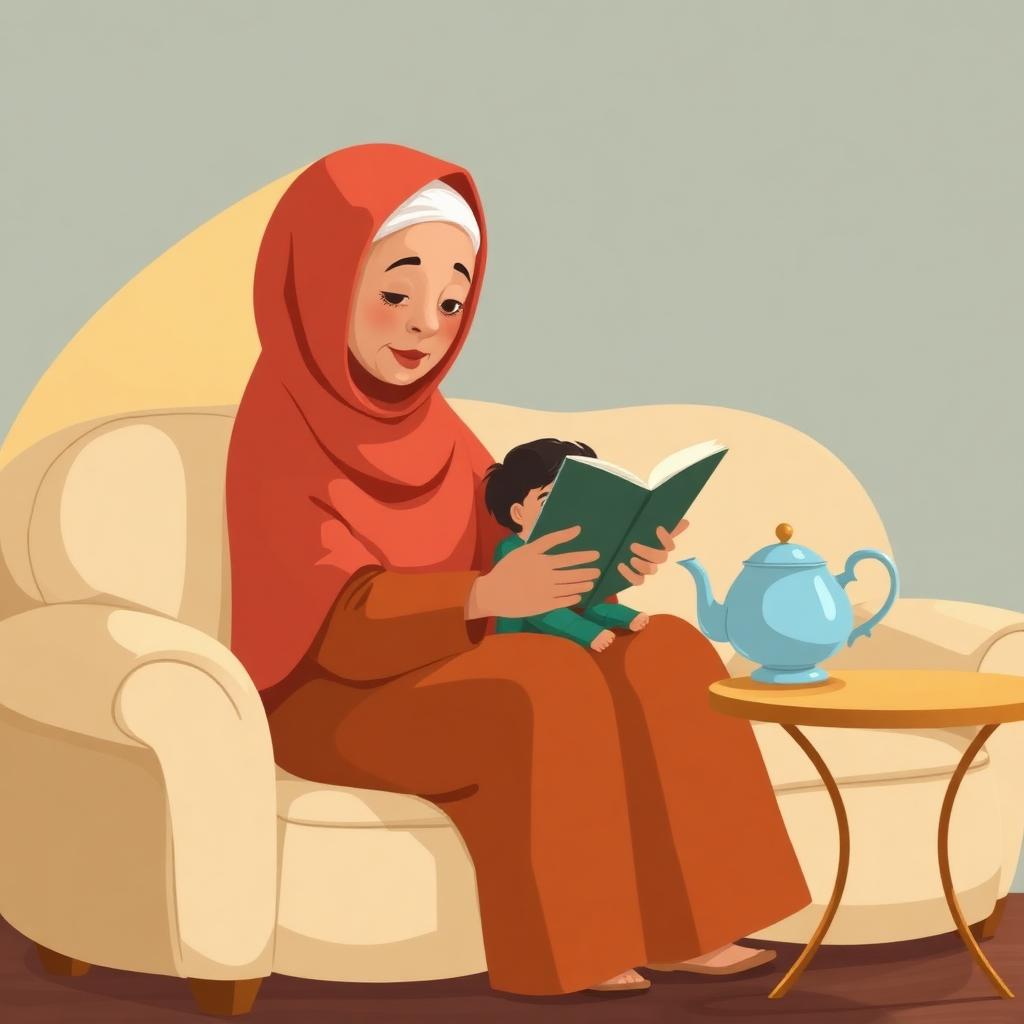
"Sit down," said Inah. "This is a long story, and it starts with me holding you when you were brand new."
So Tariq sat.
"When you were born, habibi, I looked at you — this tiny person, all wrinkled and cross and beautiful — and I wanted to give you a gift. A really good one. The best one.
So I thought about money. But money gets spent.
I thought about clothes. But clothes get outgrown — and look at you, those shoes are already too small.
I thought about toys." Inah raised an eyebrow. "Where is that truck you loved so much when you were four?"
Tariq thought hard. "…I think it broke. I think it's in a drawer somewhere."
"Exactly," said Inah. "Every gift I could think of would end. The years would quietly take it back.
And I did not want to give you a gift that ends. So I sat with you all night, and one question would not leave me alone:
What can I give this child that nothing in the world can ever take away?
Not time. Not money. Not even death."
Tariq's eyes were very wide now.
"Did you find the answer?"
"I did," said Inah. "It came to me one quiet evening — clear and whole, the way true things arrive."
The Three Doors

"Habibi, let me tell you the most important thing I know. The Prophet ﷺ told us that when a person dies, everything they were doing stops. No more prayers. No more good deeds. The pen is lifted. The book closes.
Except."
Inah held up three fingers.
"Except for three doors that stay open."
إِذَا مَاتَ ابْنُ آدَمَ انْقَطَعَ عَمَلُهُ إِلَّا مِنْ ثَلَاثٍ: صَدَقَةٍ جَارِيَةٍ، أَوْ عِلْمٍ يُنْتَفَعُ بِهِ، أَوْ وَلَدٍ صَالِحٍ يَدْعُو لَهُ
“When a person dies, his deeds come to an end except for three: ongoing charity, beneficial knowledge, or a righteous child who prays for him.”
— Sahih Muslim
"Door one: a charity that keeps flowing — we call it sadaqah jariyah. Door two: knowledge that people keep using. Door three: a good child who keeps making du'a for you.
Three doors that no one can shut. Not even death."
Tariq sat very still.
"So I asked myself: what gift walks through those doors?
And then I knew.
Build him a masjid."
The Village With More Faith Than Furniture
"Now," said Inah, "let me tell you where."
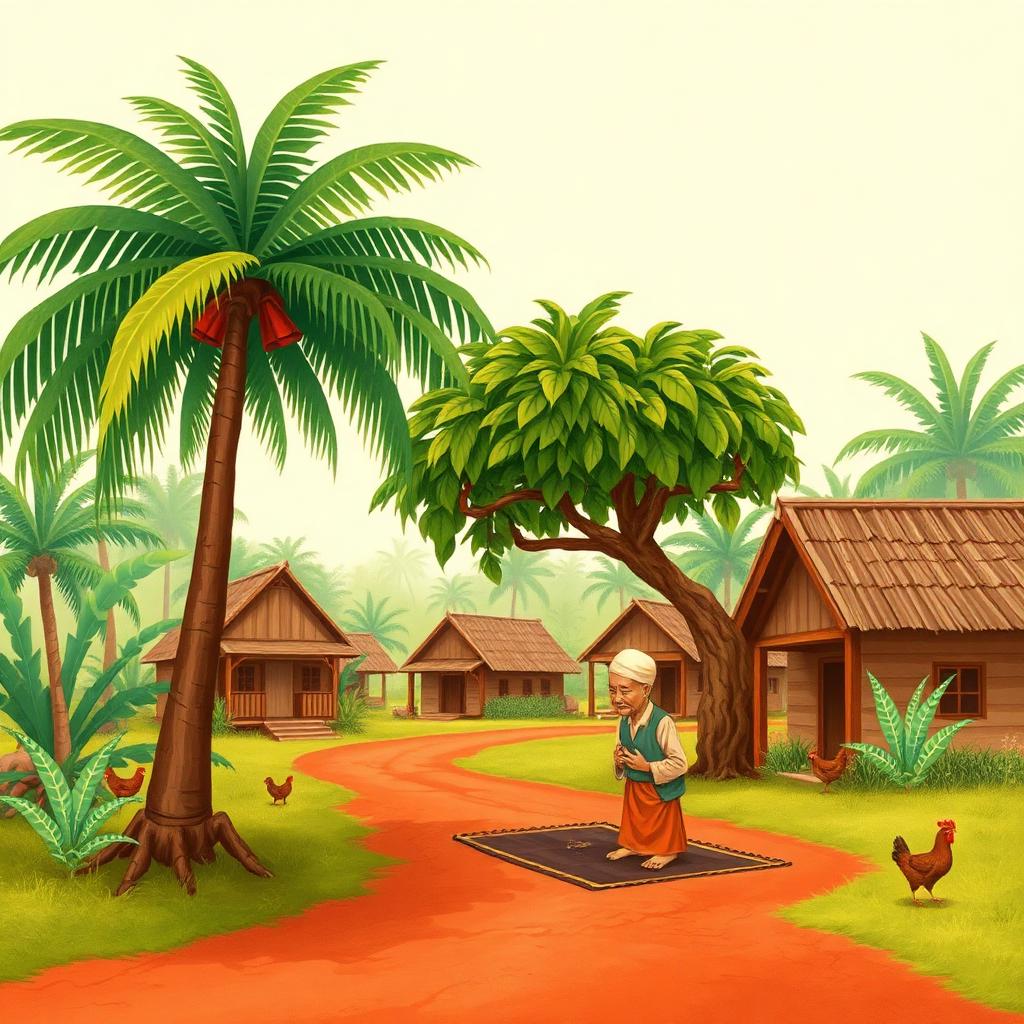
"Far away, across the ocean, there is a village. It is where I grew up, when I was smaller than you. It has palm trees and red dust and chickens who think they own the road. The people there have very little — but they have more faith than furniture.
And in all those years, do you know what that village did not have?
A masjid.
Not one. Not a single place to gather and pray. The old uncles prayed in the heat under a tree. When the rain came, they prayed in a tin hut, and no one could hear the imam over the noise. And on Eid morning — the most beautiful morning of the whole year — they had nowhere to stand shoulder to shoulder."
Tariq frowned. It was the frown of a boy who had always had a masjid.
"So," said Inah, "when you were three days old and fast asleep, I decided.
Not money. Not toys.
I would build them a masjid. The first one that village ever had. And it would be yours — your name over the door — because I wanted to give you a place, habibi. A place where the name of Allah would be called out loud, five times a day, every day, for the rest of your life.
And after your life, too."
مَنْ بَنَى مَسْجِدًا لِلَّهِ بَنَى اللَّهُ لَهُ فِي الْجَنَّةِ مِثْلَهُ
“Whoever builds a mosque for Allah, Allah will build for him a house like it in Paradise.”
— Sahih al-Bukhari; Sahih Muslim
While He Was Sleeping

And now came the part that made the hair stand up on Tariq's arms.
"Tariq," said Inah, leaning close. "Think about what you were doing while that masjid was being built. You were three days old. You could not lift up your own head. You did not know your name. You did not know the world. You did not even know Allah yet.
And your account with Allah had already started to fill."
"My… account?"
"Every prayer prayed in that masjid — while you were sleeping. Every Quran recited inside those walls — while you were learning to crawl. Every old uncle who finally had somewhere cool and quiet to pray. Every child who learned their first surah there. Every fast broken there in Ramadan, every Eid morning, every single one —
by the mercy of Allah, written for a baby who was fast asleep with his fist in his mouth."
Tariq looked at the photograph. Then at his own hands. Then back at the photograph.
"Inah," he said slowly. "You mean it's been… working? This whole time? Even when I was doing nothing?"
"Every day of your life, habibi. Even the days you were naughty."
Because this is what Allah promised:
وَنَكْتُبُ مَا قَدَّمُوا وَآثَارَهُمْ
“And We record what they have sent ahead, and the traces they leave behind.”
— Surah Ya-Sin (36:12)
"Do you hear that? Allah writes down what we do… and He also writes down the traces — the good things we leave behind us that keep on going, like footprints that never wash away."
Then It Became a River
"And Inah," Tariq asked, "did you stop?"
Inah laughed out loud. "Habibi. How could I stop?"
"When your cousin Yusuf was born, we built another masjid — Masjid Yusuf. Then we built a school so the children in those villages could learn to read the Quran without paying a single coin. When Allah invited me to Makkah, I carried Qurans in my suitcase and left them there, so that strangers I will never meet would pick them up and recite — and every letter they read, a gift for you and your cousins.
We dug wells so people could drink. We sent food to families who had lost their homes. We put books in the masajid so knowledge would keep flowing out of them.
Not one gift, Tariq. Not one masjid. Not one prayer."
Inah touched the photograph gently.
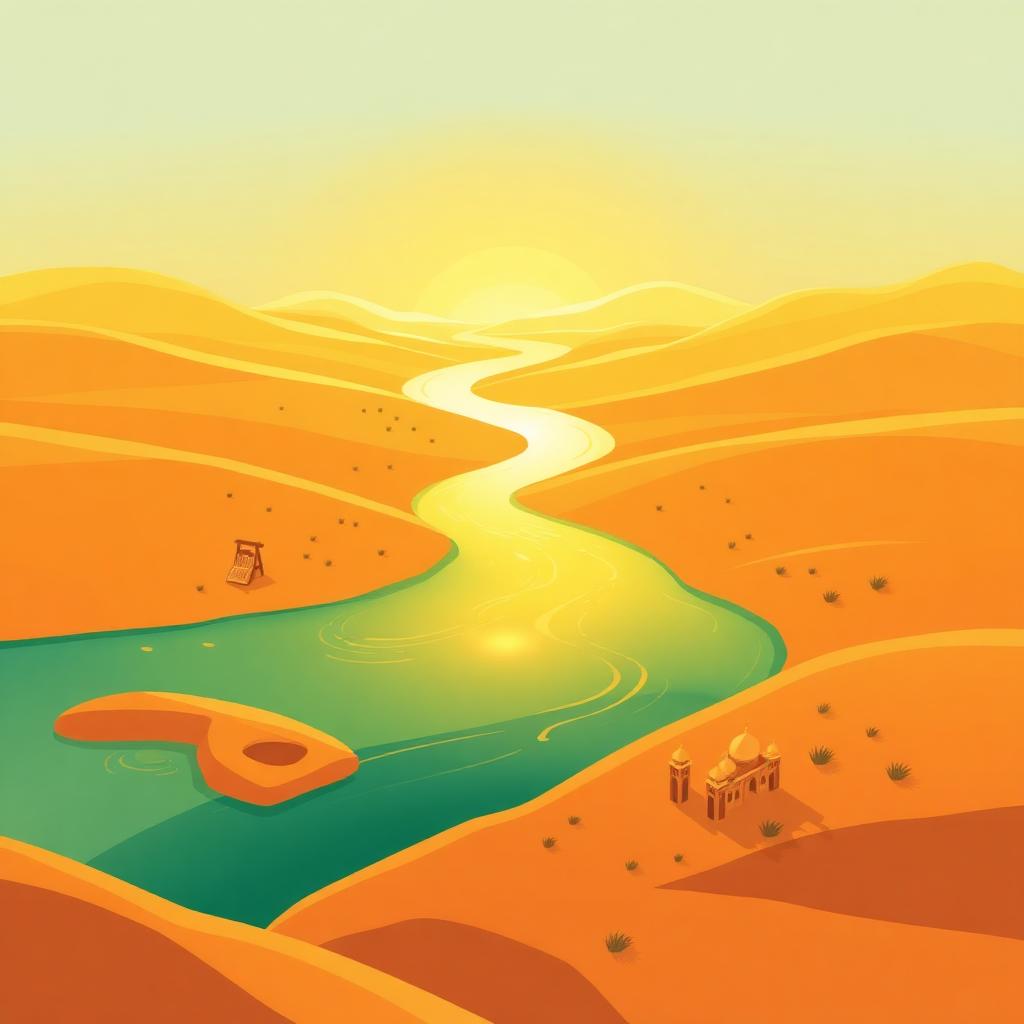
"A current. Like a river that starts as one small spring on a mountain — and then just… keeps… going."
The Boy Who Stood at the Front
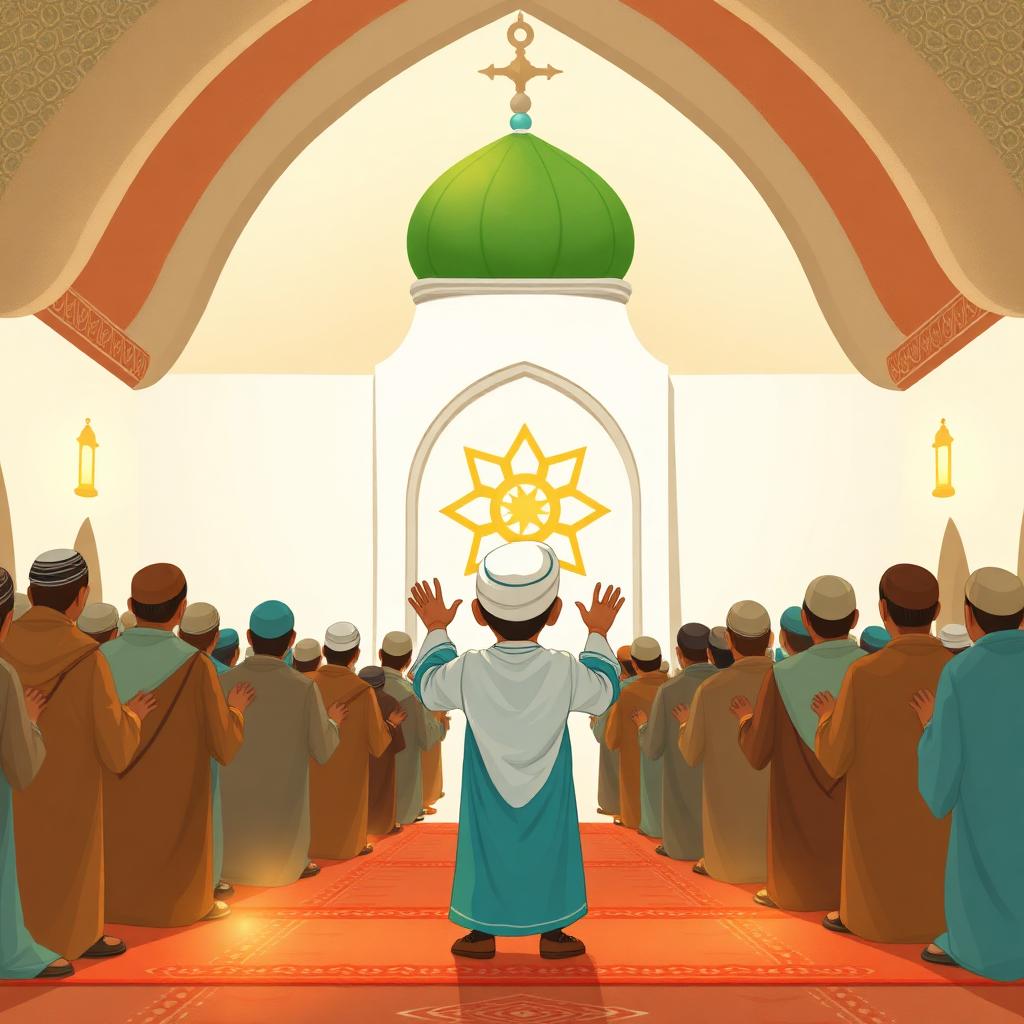
Now, this story could end there. But Allah is more generous than that.
Because the summer Tariq turned nine, they got on an airplane — a long, long flight — and then a bus, and then a jeep down a red dirt road with the windows open and the chickens scattering.
And there it was. Not a photograph.
Real.
Small and white with a green roof, and above the door, in letters he could read with his own eyes: MASJID HAMZA.
The whole village came out. Old uncles held his face in both hands. Aunties cried. Children peered at him from behind their mothers, because a boy had arrived whose name was on their masjid.
And when Maghrib came, the oldest uncle in the village — the one who had prayed under a tree for forty years — took Tariq by the shoulders and moved him gently to the very front.
"Lead us," he said.
Tariq's heart went bang, bang, bang. His mouth went dry. He was nine years old and his voice was small.
But he stood where they put him, and he took a breath, and he began.
"Allahu Akbar…"
And behind him, an entire village stood shoulder to shoulder in the masjid with his name on it.
And in the very back, in the women's row, an old woman put her hand over her mouth and wept — because nine years earlier she had held a three-day-old baby and made one quiet du'a to Allah:
O Allah, keep him until he is grown. Let him stand in that masjid, just once in his life, and lead the prayer himself.
Allah heard it. Allah kept it. Allah answered it.
Here is what Tariq understood that night, standing in a small white masjid at the end of a red dirt road:
The best gifts are not the ones you unwrap.
The best gifts are the ones that keep on giving — long after the giver is gone, long after the receiver is gone, all the way to the Day when we will need every single grain of good we ever sent ahead.
So do not only ask what you would like to be given.
Ask what you can leave behind.
Allahumma ij'al awladana min as-saliheen. Allahumma ihfadh-hum min kulli sharr. Allahumma-rzuqhum hubb al-Quran wa hubb an-Nabi ﷺ.
O Allah, make our children among the righteous. O Allah, protect them from every harm. O Allah, grant them love for the Quran and love for the Prophet ﷺ. O Allah, let the good we send ahead keep flowing long after we are gone.
Ameen.
For little builders to try
- 1
Ask the question Inah asked. Before you give any gift: will this still be giving a year after I am gone? If yes — that is the one.
- 2
Give a gift that flows. Put your own money — even a few coins — toward a well, a Quran, or a masjid. A little from a child is not little to Allah.
- 3
Leave a Quran where strangers will find it. Every letter someone else recites from it is written for you, forever, without you doing a thing.
- 4
Teach what you know. Beneficial knowledge is the second open door. Teach one person one thing this week — that door opens for you too.
- 5
Say the intention out loud. "O Allah, let this be for them." Allah hears the intention before He ever sees the deed.